Sales Productivity Tools With Behavioral Intelligence: What to Look For
Sales productivity tools with behavioral intelligence analyze conversation patterns, discovery depth, and objection handling to identify why deals succeed or fail. Leading platforms combine AI-guided coaching with real-time deal scoring, helping organizations achieve 30% improvements in win rates while reducing manual CRM work by an hour daily.
• Core capabilities include automatic interaction capture, conversation intelligence, AI-guided selling, and manager coaching insights that reduce CRM data entry burden
• Real-time deal scoring evaluates 17+ behavioral factors simultaneously, helping teams identify at-risk revenue with 85% accuracy
• AI-enhanced coaching tools deliver 14% win rate improvements by embedding guidance directly into sales workflows
• Emotion AI technology analyzes buyer sentiment through voice and interaction patterns, though ethical deployment requires transparency and human oversight
• Implementation success requires executive sponsorship, clean data, behavioral KPIs, and continuous reinforcement through just-in-time prompts
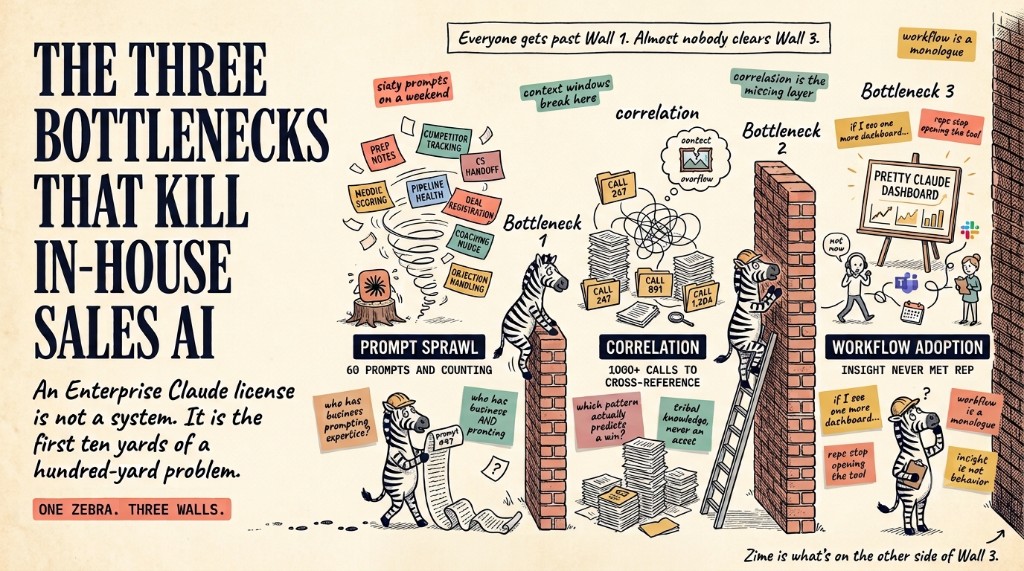
Most sales productivity tools stop at call recording and transcription. They capture what was said, but they rarely tell you why deals stall, which behaviors separate closers from the rest of the team, or how to translate insight into repeatable action. That gap is closing fast. A new generation of sales productivity tools now fuses behavioral intelligence with AI-guided execution, and the results are hard to ignore: organizations using behavior-driven guidance report 30% or better improvement in win rates.
This guide breaks down what revenue leaders should demand from modern platforms, how leading tools capture continuous behavioral data, and where emerging capabilities like emotion AI and real-time deal scoring fit into the picture. By the end, you will have a practical checklist for evaluating and rolling out behavior-driven sales tools that turn insight into predictable revenue.
Why Behavioral Intelligence Is the Missing Layer in Modern Sales Productivity Tools
Call recording platforms gave sales teams their first window into customer conversations. But transcription alone does not explain why one rep closes at twice the rate of another or why promising deals slip quarter after quarter. Behavioral intelligence fills that gap by analyzing patterns across discovery depth, objection handling, next-step clarity, and buyer engagement signals.
Gartner projects that by 2027, 95% of seller workflows will begin with AI, up from less than 20% in 2024. The shift is not simply about automation. It reflects a broader recognition that sales productivity hinges on understanding and scaling the behaviors that actually win deals.
Top-quartile B2B sales organizations already generate roughly two-and-a-half times higher gross margin than bottom-quartile peers for every dollar invested in sales. The difference is not luck. Leaders invest in tools that surface which behaviors correlate with closed-won outcomes and then operationalize those insights through coaching, playbooks, and in-the-moment guidance.
Bureau, a no-code identity decisioning platform, illustrates the payoff. After implementing a behavioral intelligence platform, the company saw a 30% increase in deal conversion from improved discovery. Reps asked better questions, positioned solutions more effectively, and saved time on manual CRM updates. That kind of lift is difficult to achieve with static training or generic call recording alone.
Key takeaway: Behavioral intelligence transforms raw conversation data into actionable patterns, enabling teams to scale what top performers do best.
What Core Capabilities Set Revenue Intelligence Platforms Apart?
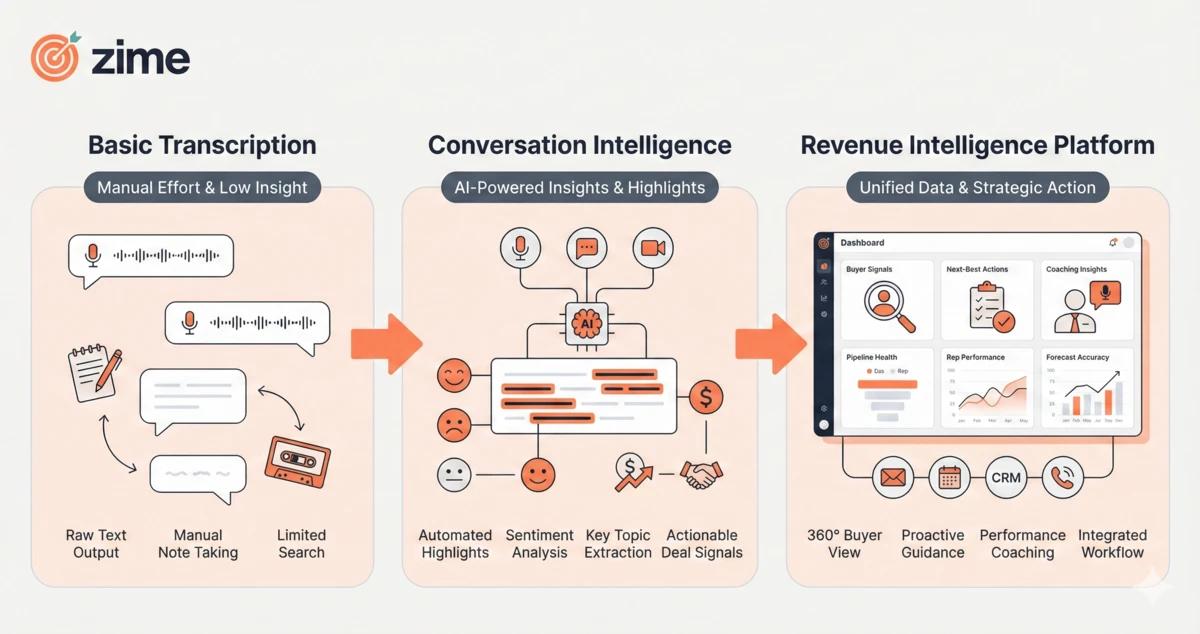
Buyers expect personalized, consultative interactions. Basic transcription tools cannot deliver that experience. Revenue intelligence platforms go further by capturing every customer touchpoint, reducing manual data entry, and guiding reps on how to engage effectively.
High-performing organizations align their enablement services to the customer journey and invest in integrated technology stacks. The CSO Insights Fifth Annual Sales Enablement Study found that companies with formalized enablement charters and aligned selling processes consistently outperform peers on win rates and quota attainment.
How Do Leading Tools Capture Continuous Behavioral Data?
Behavioral intelligence requires more than call recordings. The best platforms ingest signals from every channel, apply AI to detect patterns, and feed those insights back into workflows where reps actually work.
Revenue intelligence applications use AI and advanced analytics to amplify the value of commercial data, accelerating sales cycles and increasing success rates. They automatically identify customer interactions across emails, meetings, chats, and web calls, then analyze those interactions to surface coaching opportunities and deal risks.
Sellers today may spend only about 25% of their time actually selling. AI could double that by taking on work that surrounds selling but adds little value, freeing reps for higher-impact customer conversations.
Modern AI tools can also analyze the tone of voice, pacing, keywords, and interaction patterns in sales conversations to detect emotional signals. Real-time feedback on emotional shifts helps reps recognize when to pause, clarify, or reframe. Opportunities that consistently trend positively in buyer sentiment are more likely to close.
Data capture alone is not enough. Leading platforms connect captured signals to playbooks and coaching workflows so insights translate into changed behavior. AI agents can monitor market shifts, competitor moves, and sales performance to auto-update playbooks, replacing hours of manual monitoring with guided review.
AI-Guided Coaching and Just-in-Time Reinforcement
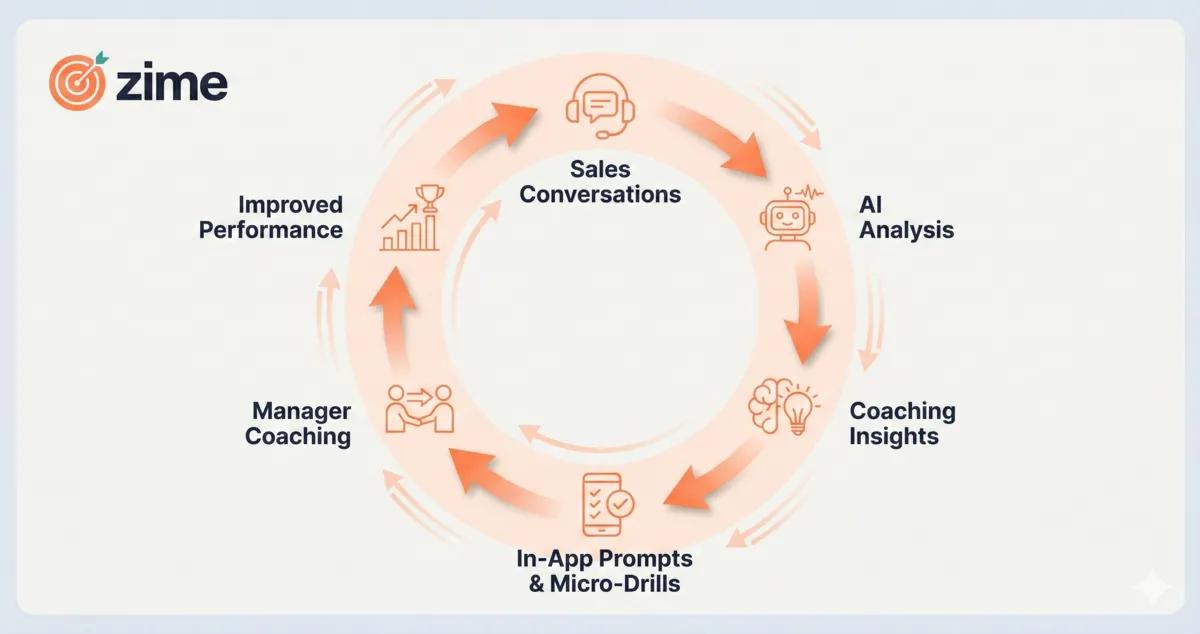
Insight without action is wasted. The most effective sales productivity tools embed coaching directly into the flow of work, delivering guidance when reps need it most.
Teams using AI-enhanced coaching tools saw an uptick in win rates of 14% by replacing informal, ad-hoc feedback with structured AI insights. Sales managers who coach reps to reinforce desired behaviors can deliver a 14% increase in win rates, according to Highspot research.
Spaced and varied practice: Short scenario drills over weeks, rotating skills like discovery, qualification, and objection handling.
In-app guidance: Contextual prompts, templates, and checklists surfaced in CRM and sequencing tools at the moment of need.
Manager-led coaching: Weekly one-on-one frameworks with scorecards and call libraries of gold-standard examples.
Performance loops: Auto-pull leading indicators into enablement to target the next week's drills; close the loop with win/loss notes.
One mid-market SaaS organization shifted to weekly micro-drills and CRM prompts. Discovery depth rose 22%, multi-threaded deals increased 18%, and win rate lifted 3.4 points in two quarters without adding headcount.
AI-powered coaching tools analyze sales conversations, simulate buyer interactions, and provide feedback without requiring manager intervention. That scalability is critical when 53% of sellers report receiving personalized coaching once per quarter or less.
How Does Real-Time Deal Scoring Improve Forecasts?
Forecasting remains one of the most painful challenges in B2B sales. Only 7% of teams achieve forecast accuracy of 90% or more, and the median accuracy hovers between 70% and 79%. The root cause is often subjective judgment that ignores behavioral signals.
Deal health scoring changes the equation. Outreach's AI Revenue Workflow Platform, for example, evaluates 17+ factors across all opportunities simultaneously, surfacing risk indicators as they emerge. By categorizing deals based on likelihood of closing, teams focus effort on winnable opportunities and avoid wasting cycles on deals that will never close.
Chief, an AI-driven sales pipeline management tool, demonstrates the impact. One company with 1,500 employees and $300M ARR used Chief to scan its entire pipeline for engagement issues. The result: $15.2M in at-risk revenue identified with 85% prediction accuracy. Leaders received a prioritized view of at-risk deals, bottlenecks, and reps with unhealthy pipelines.
Behavioral signals that inform deal scoring include:
Stale and inactive deals
Stage overstays and velocity slowdowns
Close-date drift and repeated pushouts
Single-threaded late-stage deals
Engagement drop-offs
Pipeline composition and coverage gaps
When scoring is based on behavior rather than opinion, forecasts become more reliable. Teams can redirect effort, intervene earlier, and stop losing deals for the same reasons quarter after quarter.
Can Emotion AI Really Build Trust in B2B Sales?
Emotion AI is emerging as a differentiator in sales productivity tools. Gartner's Hype Cycle for Revenue and Sales Technology highlights that Emotion AI uses software techniques to analyze the emotional state of a user via computer vision, audio input, sensors, or software logic. The goal is to help sellers interpret buyer needs and behaviors, releasing them to focus on high-value relationships.
Research suggests that AI's informational advantages can raise buyer intent, but empathy gaps can suppress it. Managerial guidance is clear: deploy AI where informational support is paramount, but retain or augment human agents where emotional support is critical.
In B2B sales, emotion detection can surface moments of hesitation, frustration, or enthusiasm. Sales managers can then coach reps on emotional blind spots like interrupting, talking over objections, or using overly aggressive language. Follow-up messages that reflect the tone of the previous call feel more personal and thoughtful.
A 78% majority of sales professionals report GenAI tools have improved prospecting outcomes significantly or moderately. Yet privacy remains a top-ranked challenge. Organizations must balance the promise of emotional insight against transparency, consent, and safeguards against bias.
Key takeaway: Emotion AI can deepen buyer relationships when deployed ethically, but teams must establish clear governance and prioritize human oversight in sensitive interactions.
Checklist: Evaluating and Rolling Out Behavior-Driven Sales Tools
Selecting and implementing a behavioral intelligence platform requires more than a feature comparison. The State of Sales Enablement Report 2025 found that 55% of organizations are unable to effectively drive go-to-market initiatives, often because they rely on multiple disconnected tools.
Evaluation Criteria
Data capture
Automatic ingestion of emails, meetings, calls, and CRM activity
Behavioral analysis
Scoring on discovery depth, objection handling, next-step clarity
AI-guided coaching
Personalized recommendations tied to real conversations
Deal risk scoring
Multi-factor models with predictive accuracy above 80%
Win-loss analysis
Continuous feedback loops that update playbooks
Integration
Native connections to CRM, call platforms, and communication tools
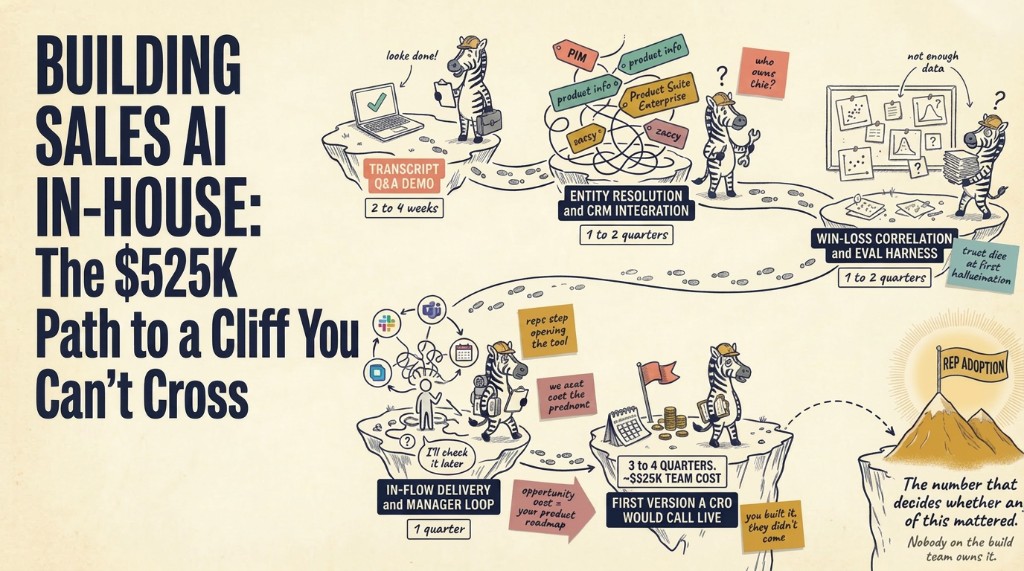
Audit existing data quality. AI needs massive data context and cleanliness. Sales and go-to-market data are often spread across systems with little quality control.
Define KPIs tied to behavior. Track discovery depth, multi-threaded engagement, objection handling effectiveness, and win rate lift.
Pilot with a focused team. Select a segment with measurable outcomes and iterate before scaling enterprise-wide.
Embed reinforcement into workflow. Just-in-time prompts, manager-led coaching, and spaced practice drive adoption.
Establish governance. Quarterly certification and sunset rules retire outdated plays and content.
Win-loss analysis deserves special attention. 63% of companies see increased win rates from win-loss programs, with half achieving at least a 10% improvement. Top performers combine executive buy-in with continuous processes and neutral third-party interviews that unlock candid feedback.
Nearly two-thirds of respondents in a recent McKinsey survey report that their organizations have not yet begun scaling AI across the enterprise. That means early movers still have time to build competitive advantage before behavioral intelligence becomes table stakes.
Turning Insight Into Predictable Revenue
The era of static call recording is ending. Sales productivity tools with behavioral intelligence capture what top performers do differently, translate those patterns into adaptive playbooks, and reinforce winning behaviors through AI-guided coaching and real-time deal scoring.
Versa Networks achieved similar results. After implementing just-in-time Actions tailored to its sales strategy, the company saw a 20% increase in pipeline by reducing wastage of leads and saved 50% of leaders' time on deal reviews.
The path forward is clear. Define the behaviors that matter, select tools that capture and analyze them at scale, and embed reinforcement into the daily workflow. Organizations that make that shift will outpace peers on win rates, forecast accuracy, and revenue per rep.
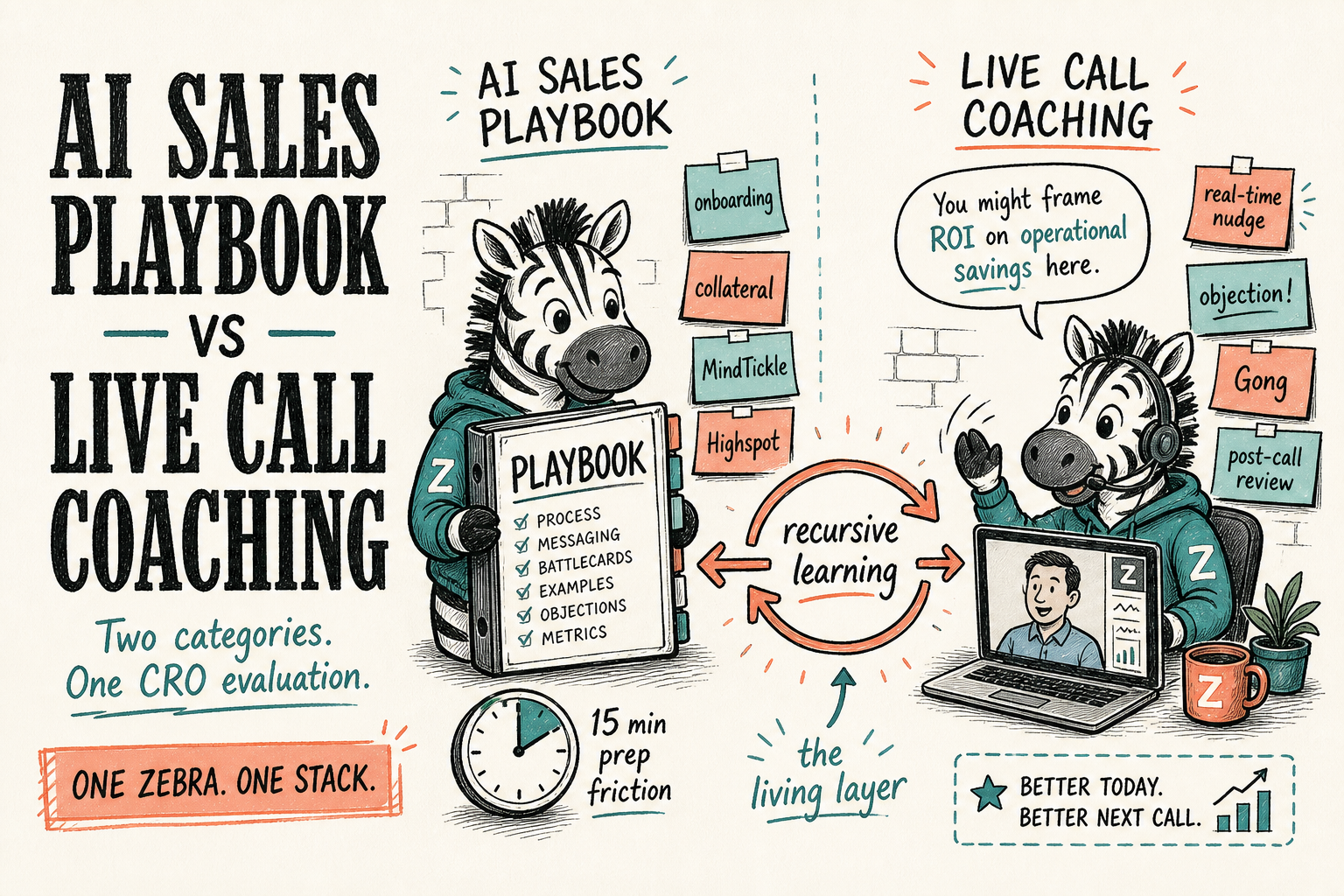
For teams ready to move beyond static training and generic call recording, Zime's Living AI Playbooks offer a practical starting point. By continuously learning from real wins and losses, they deliver in-the-moment, deal-specific guidance that drives execution and accountability without heavy AI training or ongoing manual effort.
Author
David B. Townsend
In this Blog
Have industry-leading sales tips sent straight to your inbox.
Sign up for our newsletter to stay updated on how modern technologies are revolutionizing sales methodologies.