Blog
Why Do We Lack Visibility Into Deal Health?
Most sales organizations have more tools than ever. Call recorders. CRM platforms. Forecasting dashboards. Pipeline review cadences. And yet, when a leader asks
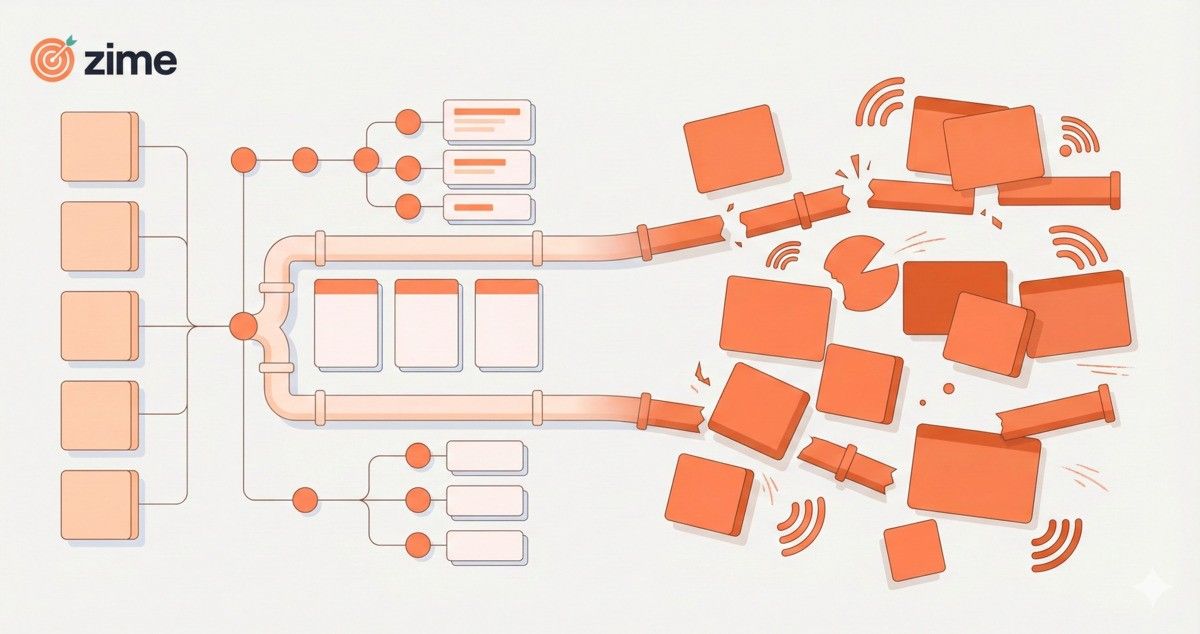
The modern sales leaders do not lose sleep over a lack of strategy. The boardroom strategy is usually sound. The territory maps are meticulously drawn, quotas are distributed based on capacity models, and the Total Addressable Market (TAM) is defined down to the zip code.
Where the insomnia sets in is the execution gap.
There is a widening chasm between the boardroom strategy and the tactical reality of a Tuesday afternoon sales call. For those responsible for forecast accuracy, this gap rarely manifests as a single catastrophic event. Instead, it appears as a slow leak of efficiency—a degradation of deal quality and conversion rates that drains revenue potential quarter over quarter.
We analyzed the operational reality of revenue teams across dynamic organizations to uncover the root causes of friction in the sales cycle. The data does not point to a lack of effort from representatives or a lack of investment from leadership.
It points to a systemic struggle with visibility, consistency, and the practical application of assets. This is not a list of grievances. It is a pattern analysis of sales enablement challenges that persist despite significant spending on tools, training, and methodologies.
Here is the leadership-grade breakdown of why enablement initiatives fail to translate into revenue velocity, and the operational shifts required to fix them.
The most expensive document in an organization is often the one nobody reads. A consistent, frustrating theme across revenue teams is the struggle to get sales representatives to actually utilize the playbooks provided to them.
This low adoption is often misdiagnosed as laziness or a lack of discipline. In reality, the resistance is rooted in credibility.
Sellers are pragmatic. They live in a messy, non-linear world of objection handling, negotiation, and shifting stakeholder priorities. However, current playbooks are frequently perceived as "academic" exercises—theoretical documents written by individuals who may not be in the trenches daily.
When a seller opens a digital playbook and sees a sanitized, perfect-world scenario that doesn't match the hostility or complexity of their actual prospect interactions, the damage is two-fold. First, they close the tab. Second, and more damagingly, they lose trust in the enablement function entirely. They view the guidance as "marketing fluff" rather than a survival tool.
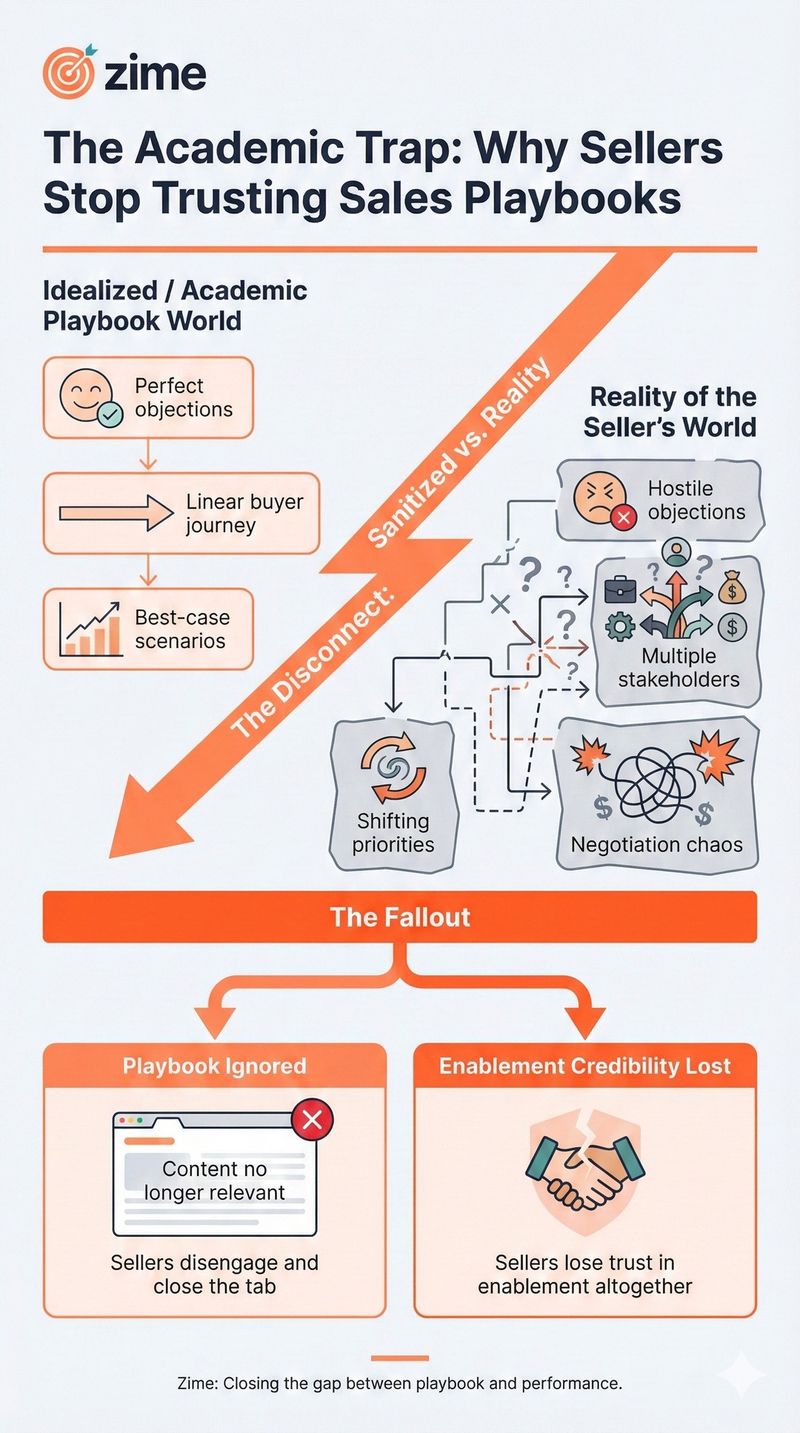
The solution lies in moving from static PDFs to dynamic guidance. Static documents die the moment they are published because they cannot adapt to the nuance of a live deal.
Leading organizations are shifting the paradigm from "reference materials" to "living playbooks." Platforms like Zime are increasingly relevant here because they ground playbook logic in real deal behavior rather than theory. When guidance is derived from what is actually happening in successful conversations—rather than what management wishes was happening—credibility is restored. If the guidance feels like it was forged in a real sales conversation, adoption ceases to be a compliance task and becomes a competitive advantage for the rep.
In every sales organization, there is a "magic tier" of top performers. These are the rainmakers who intuitively know what to say, when to push, and when to pause.
The fundamental sales enablement problem is that this success is locked inside their heads. Leadership struggles to create consistency across the sales force because they cannot scale these winning behaviors, leaving the bulk of the revenue dependent on a small percentage of the workforce.
The best sellers often cannot articulate why they are successful. They operate on instinct, reading micro-cues in a prospect's tone that others miss. When asked to train others, they might say, "I just built rapport," which is useless advice for a B-player trying to understand how.
This creates a high-variance performance curve. Leadership wants a standardized process where inputs equal outputs. Reality delivers a chaotic environment where revenue relies heavily on individual brilliance rather than systemic excellence.
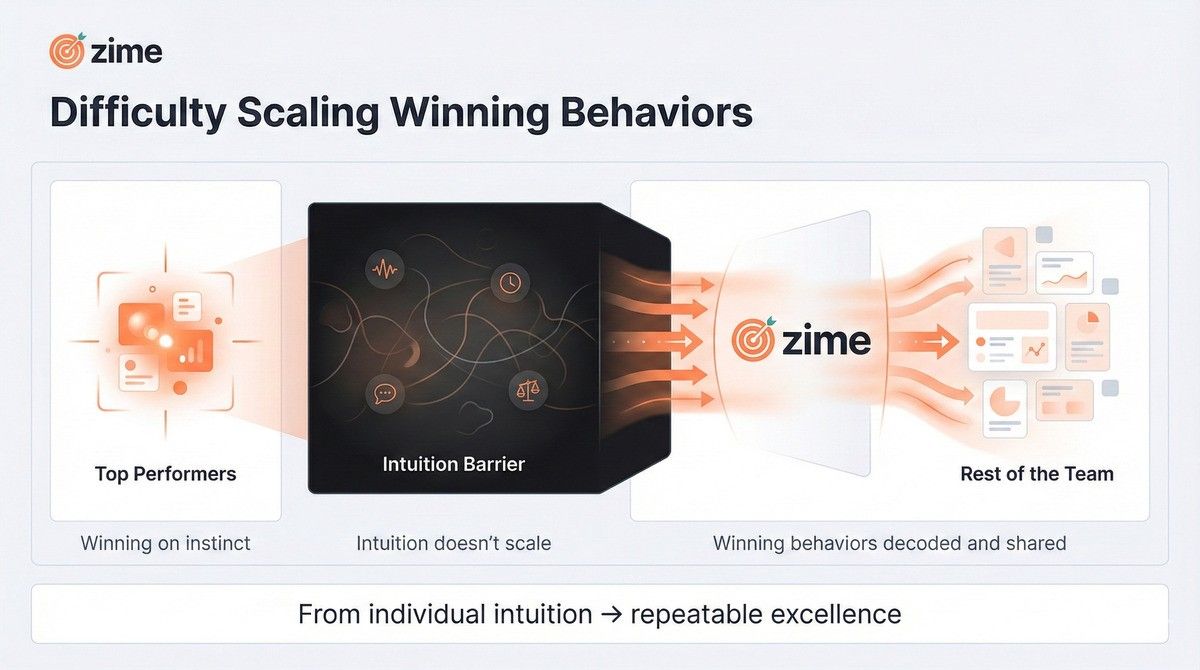
The Fix: Decoding the "Black Box"
Scaling revenue cannot be a hiring problem; it must be an enablement solution. The fix requires a mechanism to decode the specific tactical choices of top performers—the questions they ask, the pauses they take, and the specific phrases that unlock value.
This is where AI-driven enablement platforms like Zime bridge the gap. By analyzing the nuances of successful calls, organizations can democratize "what good looks like," turning the implicit intuition of the top 10% into explicit coaching for the middle 60%.
We live in the golden age of data, yet managers are starving for insight. While conversation intelligence tools have become ubiquitous, they often provide a false sense of security through high-level activity metrics.
Current tools provide keyword tracking and talk-to-listen ratios, but they fail to capture the nuance of the conversation.
Managers struggle to understand the "why" behind a lost deal. They can see that a rep spoke for 45% of the call. They can see that the word "competitor" was mentioned. But they cannot easily see if the rep asked the right question at the right time, or if they validated the customer’s intent intensity.
The Consequence: Manual Inspection
Because the data is surface-level, managers are forced into heavy manual inspection—listening to hours of calls at 2x speed—rather than engaging in data-driven coaching. This destroys manager leverage. Instead of strategic coaching, they are bogged down in forensic auditing, trying to catch mistakes after the deal is already lost.
The Fix: Intent Over Activity
To fix this, the metric for coaching must shift from activity (did they say the words?) to intent (did they achieve the outcome?). Platforms that go beyond keywords to analyze context are essential for shifting managers from "call reviewers" to "deal strategists." When managers can instantly see quality gaps rather than just quantity metrics, coaching sessions become forward-looking strategy discussions rather than retroactive reprimands.
The CRM is the system of record, but it is rarely the system of reality. A persistent sales enablement issue is the significant gap in data quality within platforms like Salesforce or HubSpot.
Reps consistently fail to enter detailed notes, next steps, or deal context. This isn't just an administrative annoyance; it is a forecast killer. When the CRM lacks "clean data," leadership cannot understand why deals are stalling or winning.
The Visibility Black Hole
The friction arises from a fundamental misalignment of incentives:
Because fields remain empty or generic, pipeline reviews become interrogation sessions. "What's happening with XYZ Corp?" becomes a twenty-minute debate because the data in the CRM suggests the deal is in "Stage 3," but without context, that status is meaningless.
The Fix: Automation as the Trade-Off
You cannot punish a sales team for better data hygiene. The fix is to reduce the friction of data entry through automation and integration. If the enablement stack can capture call notes, next steps, and competitor mentions automatically and sync them to the CRM, the "tax" on the rep is removed. When the system gives value back to the rep by auto-generating the follow-up email or the deal summary, data quality improves as a byproduct of a smoother workflow.
Modern enterprise sales is rarely a single motion. Companies often operate complex hybrid models, selling both standardized SaaS products and bespoke consulting services simultaneously.
This hybrid model requires fundamentally different sales approaches. Selling a standardized product requires a defined discovery process and a feature-focused value proposition. Selling complex services requires a consultative, scope-based approach where the "product" is trust and expertise.
The challenge is that reps struggle to switch contexts effectively between these two worlds.
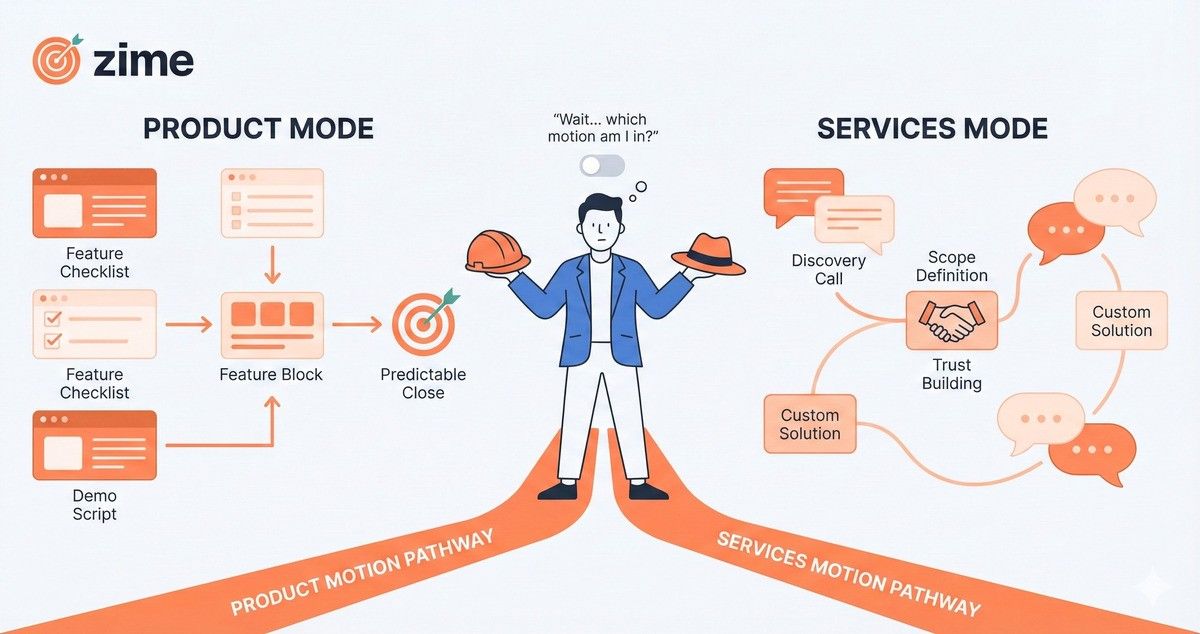
Why This Breaks Enablement
A "one-size-fits-all" training program fails here. If a rep spends the morning pitching a defined product feature and the afternoon trying to scope a complex service engagement, their brain is constantly resetting. Without distinct, accessible pathways for each motion, the default behavior is to pitch whatever is easiest—usually the product—to the detriment of the more complex (and often higher margin) solution.
The Fix: Motion-Specific Pathways
Enablement must be bifurcated. The fix is to create distinct "tracks" or "play modes" within the enablement environment. When a rep enters a Service opportunity, the prompts, assets, and battle cards must automatically shift to support a consultative dialogue. Reducing the cognitive load of context switching allows the rep to show up as a product expert at 10 AM and a trusted advisor at 2 PM without friction.
Innovation is useless if the sales team cannot sell it. A specific friction point identified in our analysis is the challenge of driving adoption for new products—specifically distinct offerings that fall outside the core competency of the sales force.
Sales teams gravitate toward what they know. When a company launches a new SKU, it requires the rep to learn a new pitch, new objection handling, and new use cases.
The Opportunity Cost
The struggle is not just about lack of knowledge; it is about risk. Reps perceive pitching a new, unproven product as a risk to their relationship with the buyer.
Consequently, new products languish on the price list, and the R&D investment fails to yield the projected ROI.
The Fix: De-Risking the Ask
To fix this, enablement must lower the risk threshold. This involves providing "micro-scripts" and bridging questions that allow a rep to introduce the new product safely. Furthermore, "safe practice" environments where reps can fail in private before they fail in front of a customer are critical. If you can prove to the rep that the new product enhances their status with the buyer rather than threatening it, adoption follows.
The market moves faster than the training schedule. Organizations find it incredibly difficult to quickly train the entire sales team on time-sensitive offerings or competitive shifts.
There is a dangerous lag between a market opportunity arising (e.g., a competitor crash, a regulatory change, a sudden market need) and the sales force being ready to exploit it.
This lag prevents the team from capitalizing on urgent market needs because reps are not equipped to pitch the new catalog items immediately.
The Enablement Bottleneck
Traditional enablement—scheduling a webinar, creating a deck, updating the LMS—is too slow for modern revenue velocity. By the time the "official" training is rolled out, the window of opportunity may have closed, or the competitor may have already adjusted their stance.
The Fix: Just-in-Time Intelligence
The solution is to move from "Just-in-Case" learning (training everyone on everything once a quarter) to "Just-in-Time" learning. This means pushing bite-sized, actionable intelligence directly into the rep’s workflow the moment it is needed. A flashcard or a battle card that appears during the preparation phase for a specific call type is infinitely more effective than a webinar attended three weeks prior.
In high-growth sales organizations, ramp time is the silent killer of growth. We found that ramping up new sales reps takes far too long, often exceeding six months before they are fully productive.
New hires struggle because they lack on-demand access to "what good looks like." They are often drinking from a firehose of product information—specs, pricing, CRM rules—but starving for behavioral examples. They know what to sell, but they don't know how it sounds when it's sold well.
The Cost of Slow Ramp
Without a structured way to clone the behaviors of top performers, new hires are left to learn by osmosis or trial and error. In a remote or hybrid world, "learning by osmosis" (overhearing the top rep on the phone next to you) is structurally impossible.
The Fix: Structured Behavioral Libraries
The fix is to curate a library of "Game Tape"—actual recordings of successful discovery calls, negotiations, and closings—indexed by the specific skills the new hire needs to learn. Instead of vague advice, the new hire listens to 10 examples of how the best reps handle pricing objections. This mimics the osmosis of the sales floor, digitally accelerating the absorption of tribal knowledge.
To sell value, you must know the customer. However, vital customer information is often scattered across different internal systems and is not easily accessible to reps.
Reps often have to check LinkedIn, the CRM, a support ticket system (Zendesk/Jira), and marketing automation logs just to get a basic picture of who they are talking to.
This fragmentation creates a massive cognitive load and wastes selling time.
The Generic Pitch
When intelligence is fragmented, the sales pitch becomes generic. Reps default to a standard deck because they don't have the specific insights required to tailor the narrative. This leads to lower conversion rates and a "spray and pray" approach that alienates sophisticated enterprise buyers who expect you to know their business.
The Fix: The Single Pane of Glass
The operational fix is consolidation. Enablement and Ops teams must prioritize surfacing critical data points into the environment where the rep works (usually the CRM or the engagement platform). If a rep has to click five tabs to prepare for a call, they won't do it. If the insights—"Open Support Ticket (Critical)"—are pushed to them, they will use it to save the deal.
Strategy without tactics is hallucination. A critical finding is that many organizations lack a structured "tech-level" framework that defines specific activities sellers should perform at each stage of the deal cycle.
Most organizations have high-level playbooks. They know what Stage 1 (Discovery) and Stage 4 (Negotiation) look like broadly. However, there is often no granular guidance on the tactical actions required to move deals forward between these milestones.
The Gap: The playbook says "Validate Budget."
The Reality: The rep doesn't know how to ask for budget validation without sounding pushy in that specific deal context.
This lack of granular guidance leaves reps guessing at the specific actions required to unlock the next stage of the funnel. They know where they need to go, but not the path to get there.
The Fix: Operationalizing the Framework
The fix is to break down high-level stages into micro-actions. Instead of a stage called "Discovery," the framework should define the three "Exit Criteria" for that stage: 1. Identify pain, 2. Quantify impact, 3. Map stakeholders. By defining the tactical inputs, you clarify the output. The framework must move from a philosophy to a checklist of verifiable behaviors.
Visibility scares people. There is significant pushback from sales teams regarding recording calls, often driven by a belief that it makes prospects uncomfortable.
While reps cite prospect discomfort, the resistance is often internal. It is a fear of surveillance. Sales has traditionally been a "black box" profession—as long as you hit your number, nobody asked how you did it. Recording calls breaks that seal.
However, the impact on the business is severe. Without these recordings, leadership lacks the objective visibility needed to provide effective coaching.
The Coaching Blind Spot
If you cannot hear the call, you cannot coach the skill. You can only coach the outcome. This forces managers to manage by results (which is reactive) rather than managing behaviors (which is proactive). The resistance to recording creates a blind spot around the most critical moments of the sales cycle.
The Fix: Rebranding to "Game Tape"
The cultural fix is to reframe recording from "Big Brother" to "Game Tape." In professional sports, no athlete would refuse to watch a tape of their performance. It is the primary tool for improvement. Leadership must demonstrate that recordings are used to help reps win more money, not to catch them doing something wrong. Highlighting "saves" (where a manager helped rescue a deal because they heard the recording) changes the narrative from surveillance to support.
The top of the funnel is often leaky. There is a significant gap in accurately qualifying leads, particularly within the Inside Sales / SDR function.
Reps struggle to distinguish between prospects who are just "window shopping" and those with genuine intent, budget, and authority. In the modern digital buying journey, "interest" is easy to fake. A download doesn't equal intent.
The Downstream Impact
This results in unqualified deals moving down the funnel, wasting the time of senior sellers. When an Account Executive jumps on a call with a prospect who has no budget and no timeline, it isn't just a wasted hour—it is a morale hit and a distraction from real revenue opportunities. This friction creates resentment between the SDRs (who want meetings booked) and AEs (who want deals closed).
The Fix: Objective Entry/Exit Criteria
The fix is to implement rigorous, objective qualification gates. "Feeling good" about a call is not a qualification metric. The organization must define binary criteria (e.g., "Has the prospect confirmed a timeline for implementation?") that must be met before a deal moves stages. This removes emotion from the forecast and enforces discipline at the handover points.
Marketing creates content. Sales ignores it. There is a significant, expensive gap between the marketing/enablement assets created and what reps actually use or remember during calls.
It doesn't matter how beautiful the whitepaper is or how compelling the ROI calculator is if the rep forgets it exists during a negotiation. Important initiatives often fail because reps don't recall the specific value proposition arguments in the heat of the moment.
The Inventory Illusion
Enablement teams often measure success by output (number of assets created). Sales leaders measure success by outcome (deals closed). When content sits in a static repository, disconnected from the conversation workflow, it creates an illusion of support that crumbles under pressure. The content exists, but it isn't accessible when it matters.
The Fix: Contextual Content Delivery
The solution is to stop asking reps to search for content and start pushing content to them based on context. If a rep is in a "Negotiation" stage opportunity with a "Healthcare" prospect, the system should automatically surface the relevant case studies and discount approval matrix. Content must find the rep, not the other way around.
Whether it's MEDDIC, SPICED, Challenger, or Sandler, the methodology is the operating system of the sales floor. Yet, organizations struggle to get these methodologies to actually stick.
Despite expensive training rollouts and certifications, reps often revert to old habits the moment the trainer leaves the building. They may superficially follow the framework—checking a box in the CRM to appease management—but they don't internalize the philosophy.
The Wasted Investment
This leads to low adoption rates and wasted enablement investment. A methodology that is only used during QBRs (Quarterly Business Reviews) and ignored during daily calls is not a methodology; it is a distraction. The challenge is moving methodology from a "compliance task" to a "selling tool."
The Fix: Embedding, Not Just Training
You cannot train a methodology into existence; you must engineer it into the workflow. The fix is to configure the CRM and enablement tools so that the methodology is the path of least resistance. If the CRM fields and prompt questions map directly to MEDDIC, the rep uses MEDDIC by default. The methodology must be the language of the business, spoken in every forecast call and 1:1, not just a binder on a shelf.
Finally, we cannot ignore the sheer weight of the tech stack. Sales representatives are overwhelmed by the number of tools they are expected to use, leading to active resistance.
Reps are logging into a CRM, a call recorder, a sales engagement platform, a content repository, a forecasting tool, and LinkedIn. They view administrative tasks like updating these systems as a burden that takes them away from their primary job: selling.
The Adoption Wall
When a new tool is introduced to "help" them, the knee-jerk reaction is fatigue. "Another login? Another tab? Another thing to update?" This fatigue creates a barrier to adoption for even the most useful technologies. If the tool doesn't seamlessly integrate into their workflow, it will be rejected.
The Fix: Invisible Integration
The goal of the modern revenue operations team should be to make the tech stack invisible. The "fix" is deep integration where the rep lives in one primary interface (usually email or the CRM) and the other tools work in the background. If a tool requires a rep to change their daily behavior significantly, it will fail. If it enhances their current behavior without adding friction, it will stick.
When you look at these 15 sales enablement challenges in aggregate, a clear picture emerges. The failure of sales enablement is rarely due to a lack of content or a lack of data. We have more content and data than ever before.
The failure is one of connection.
The path forward isn't buying another tool or writing a longer playbook. It is about demanding visibility into the execution gap. It is about shifting from "enabling" via static assets to "empowering" via dynamic, context-aware guidance.
The organizations that solve these challenges are the ones that move from defensive forecasting to predictable, scalable revenue growth. They stop asking "What new content do we need?" and start asking "Why isn't the current content reaching the conversation?"
The answer lies in the gap between what you think is happening on the call, and what is actually being said. Closing that gap is the only enablement initiative that matters.
The biggest sales enablement challenges stem from execution gaps rather than strategy. These include low playbook adoption, inability to scale top-performer behaviors, surface-level coaching data, poor CRM visibility, and disconnected enablement content that fails to show up during real sales conversations.
Most enablement initiatives fail not due to lack of resources, but because of disconnection. Playbooks are disconnected from real conversations, coaching is disconnected from deal context, and methodologies are disconnected from daily workflows. Without tying enablement directly to live deal execution, investment turns into shelfware rather than revenue impact.
Closing the execution gap requires visibility into what actually happens during sales conversations and the ability to translate that insight into real-time guidance. Tools like Zime help by grounding enablement in live deal behavior, decoding top-performer actions, and surfacing context-aware coaching directly within the rep’s workflow. This shifts enablement from static content to dynamic, execution-driven support.
Most coaching tools focus on activity metrics like keywords and talk ratios but miss conversational intent. This forces managers into manual call reviews instead of strategic coaching. Effective sales enablement requires intent-based insights that explain why deals stall or progress, not just what was said.
The most effective approach is shifting from static enablement assets to dynamic, context-aware guidance embedded directly into the sales workflow. When coaching, content, methodology, and customer intelligence align with real conversations, enablement becomes a revenue accelerator instead of a support function.