Solution selling is a consultative B2B sales methodology where reps diagnose root-cause problems before co-creating tailored solutions that deliver quantified business outcomes. Unlike product selling's feature focus, solution selling anchors discussions on buyer-desired results and internal consensus, addressing the reality that B2B buyers spend only 17% of purchase time meeting with suppliers while managing 6-10 decision makers.
TLDR
Solution selling diagnoses root problems before prescribing solutions, focusing on business outcomes rather than product features
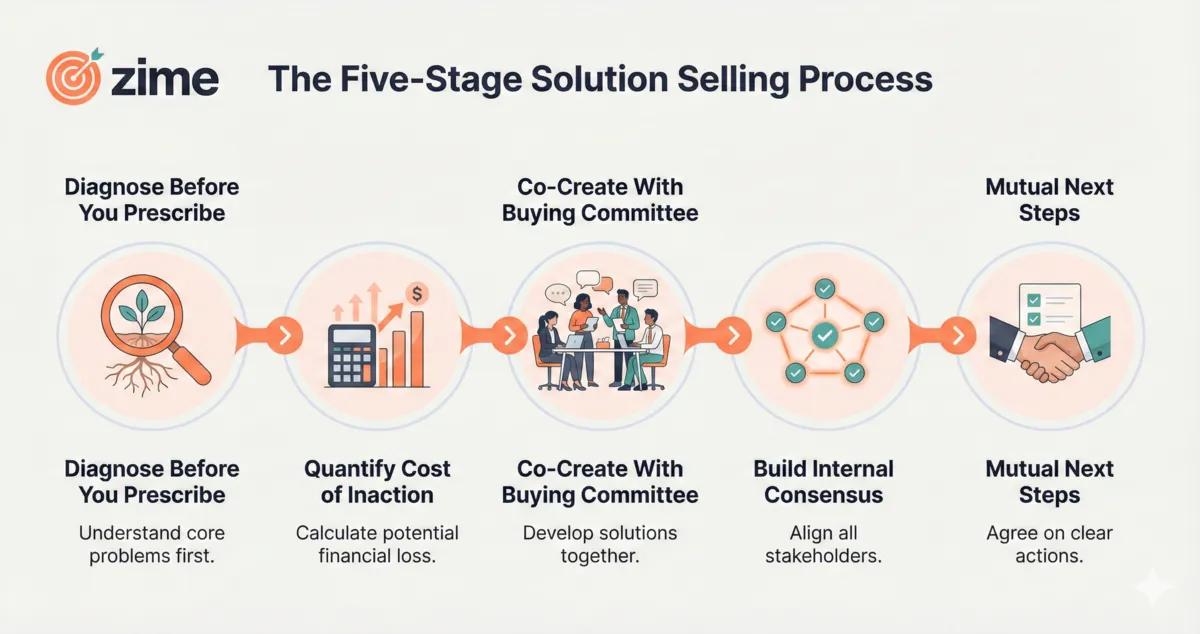
Five key stages: diagnose root causes, quantify cost of inaction, co-create solutions with buyers, build internal consensus, and close with mutual next steps
Common mistakes include applying the methodology to simple transactions and underinvesting in rep development for consultative skills
Solution selling complements other methodologies like SPIN (discovery), Challenger (differentiation), and MEDDICC (qualification) rather than replacing them
Traditional product pitches stall when ten stakeholders all want different outcomes. This guide unpacks solution selling: what it is, why it emerged, and how elite teams apply it today.
Why Does Product-Led Selling Fail in Complex B2B Deals?
Enterprise buyers are not shopping for features. They are navigating organizational change, internal politics, and risk. When reps lead with product specs, they miss the conversation buyers actually need to have.
"Enterprise customers aren't looking for technology; they want solutions," notes MarketStar's analysis of enterprise sales. Yet many sellers still default to feature lists and competitive comparisons, hoping buyers will connect the dots themselves.
The problem is structural. Gartner research finds that when B2B buyers are considering a purchase, they spend only 17% of that time meeting with potential suppliers. The rest is spent researching independently, debating internally, and reconciling conflicting information across the buying group. The typical buying group for a complex B2B solution involves six to ten decision makers, each armed with four or five pieces of information they have gathered independently and must de-conflict with the group.
This creates a paradox: the harder reps push product, the less time buyers have to listen. Product-led pitches assume buyers know what they need and simply require persuasion. In reality, more than three-quarters of the customers Gartner surveyed described their purchase as very complex or difficult. Buyers struggle not because they lack options, but because they cannot align their own organization around a decision.
Key takeaway: The challenge in complex B2B sales is rarely convincing buyers your product is good. It is helping them complete the buying process at all.
What Is Solution Selling and How Is It Different?
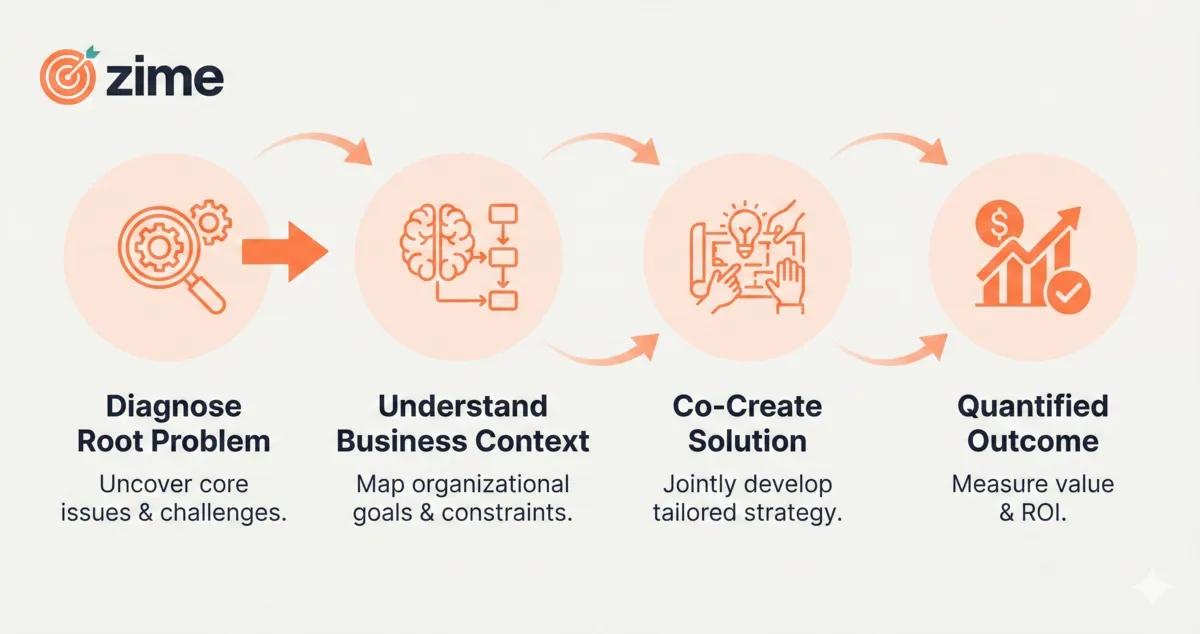
Solution selling is a consultative B2B sales methodology in which the rep first diagnoses the customer's root-cause problems, then co-creates a tailored combination of products, services, and change-management support that delivers a quantified business outcome. Unlike product selling, the discussion anchors on the buyer's desired results, risk tolerance, and internal consensus, not on features or price.
What is solution selling?
Outreach defines it succinctly: "Solution selling is a sales technique in which sellers focus on identifying a prospect's needs and then recommend a particular product or service that addresses those needs." The term was coined in the 1970s by Frank Watts, who then began teaching his method to sales teams as an independent consultant.
The evolution to a solutions go-to-market approach is now a top priority for many B2B organizations, according to Forrester. This shift reflects a fundamental change: buyers expect sellers to understand their business before proposing anything.
Solution selling sits in the middle ground: more diagnostic than product selling, more outcome-focused than pure consultative approaches. Product selling focuses on features and specs, with the rep as persuader, best for commodity purchases. Solution selling addresses customer problems and outcomes, with the rep as problem-solver, ideal for complex deals with multiple stakeholders. Consultative selling builds broad advisory relationships, positioning the rep as trusted advisor for long-term strategic accounts. Value selling emphasizes ROI and financial justification, with the rep as business analyst for CFO-led buying processes.
As Outreach notes, "Solution selling starts with identifying specific problems and positioning your product as the answer. Consultative selling is broader, focusing on becoming a trusted advisor who might recommend solutions that don't involve your product at all."
Common Misconceptions (It's Not Just Asking More Questions)
Many sales professionals struggle to move beyond pitching their products or services to providing solutions that are connected to customer business outcomes, according to Harvard Business Review. This is the core misconception: that solution selling simply means asking more discovery questions before delivering the same product pitch.
True solution selling requires a different mindset. The best salespeople are replacing traditional "solution selling" with "insight selling," a strategy that demands a radically different approach across several areas of the purchasing process, according to research from CEB (now Gartner). The difference is not in the number of questions asked, but in the value delivered during the conversation itself.
What Does a Five-Stage Solution Selling Process Look Like?
Effective sales discovery requires collaborative conversations between buyers and sellers in which each party has a stake in uncovering challenges and finding solutions, according to Gartner. The solution selling process follows a structured progression, but great reps adapt it to each deal.
The Brooks Group surveyed their B2B clients and found that 50% of sales teams are selling to groups of 3-5 stakeholders, while 12% face committees of 6-9 people, and 4% deal with groups of 10 or more decision-makers. The top four obstacles when selling to buying committees are:
Gaining access to all stakeholders (54% of respondents)
Differentiating against competitive offerings (33%)
The five-stage process addresses each of these challenges systematically.
5 stages of solution selling
1. Diagnose Before You Prescribe
When salespeople uncover challenges, it's very tempting to jump to a solution quickly. But if the challenge is more a symptom than a root cause, a solution will be temporary only, and the problem will come back over and over, according to RAIN Group.
The Five Whys technique, pioneered by Taichi Ohno of the lean manufacturing movement, helps reps work with prospects to uncover the root causes of what is driving their needs. Elite reps use this approach to transform vague complaints into specific, actionable problems.
In the realm of B2B sales, distinguishing between a problem and its underlying cause can often blur, leading to misdiagnoses and ineffective solutions. Consider a high-rise building that faced complaints about long waits for the lift. While replacing the lift was a potential solution, it was prohibitively expensive. The ingenious solution of installing mirrors in the lift foyer distracted tenants, making the wait less tedious and addressing the complaint without a major overhaul. The same principle applies in B2B sales: the visible issue is often just the tip of the iceberg.
2. Quantify the Cost of Inaction
Once the root problem is clear, elite reps translate it into business terms. The Forrester Total Economic Impact (TEI) methodology provides a rigorous analysis that incorporates costs, benefits, future technology and business strategy, business flexibility, and associated risks.
One TEI study influenced 233 active opportunities, equivalent to $19 million, within five months of publication. Of those 233, 54 closed won. The study reduced time developing a business case by 33% and reduced time to create content marketing by 95%.
The principle is straightforward: buyers cannot justify change without understanding the cost of staying the same. Reps who quantify the status quo create urgency that feature lists never can.
3. Co-Create the Solution With the Buying Committee
Before sellers can influence a buying committee, they must first understand it. This requires thorough stakeholder mapping and organizational analysis, according to The Brooks Group. Mapping helps sellers see gaps in their access, revealing who they know versus who they need to know, creating a roadmap for relationship building.
Gartner categorizes stakeholders into three types with distinct behaviors:
Mobilizers: Excel at rallying their organizations around a purchase, driving consensus and championing change
Talkers: Always willing to talk with sellers and share information but not capable of moving a purchase decision forward
Blockers: Wired to avoid change and strongly prefer stability over disruption
Since 67% of final purchase decisions are made or influenced by someone not on the buying committee, preparing advocates to represent your solution becomes critical.
4. Position Internally and Build Consensus
The average buying group now includes 11 active members, each with their own perspective and ability to say "no." Star reps pursue profiles that are far better at generating consensus: Go-Getters, Teachers, and Skeptics, rather than friendly informants who lack influence.
This stage requires reps to coach their internal champions. The goal is not just to win the champion's support, but to equip them to sell internally when the rep is not in the room.
5. Close With Mutual Next Steps, Not Pressure
One customer review from SonicWall illustrates the impact of clear next steps: "Win/loss reports highlighted that ~70% of our reps skipped clear next steps; targeted coaching corrected it and our closed-won climbed 40% within 6 months," said Austin Fanning, Sr. Director of Sales at SonicWall.
Deal coaching isn't a discussion for its own sake. It's about sharpening judgment and creating forward motion. As sales coach Hillary Wild notes, "Start open, then get more pointed to guide them toward the right conclusion."
The consensus close replaces pressure with process. Instead of asking for the deal, reps confirm mutual agreement on what happens next, who owns each action, and when follow-up occurs.
When Does Solution Selling Shine – and When Does It Fail?
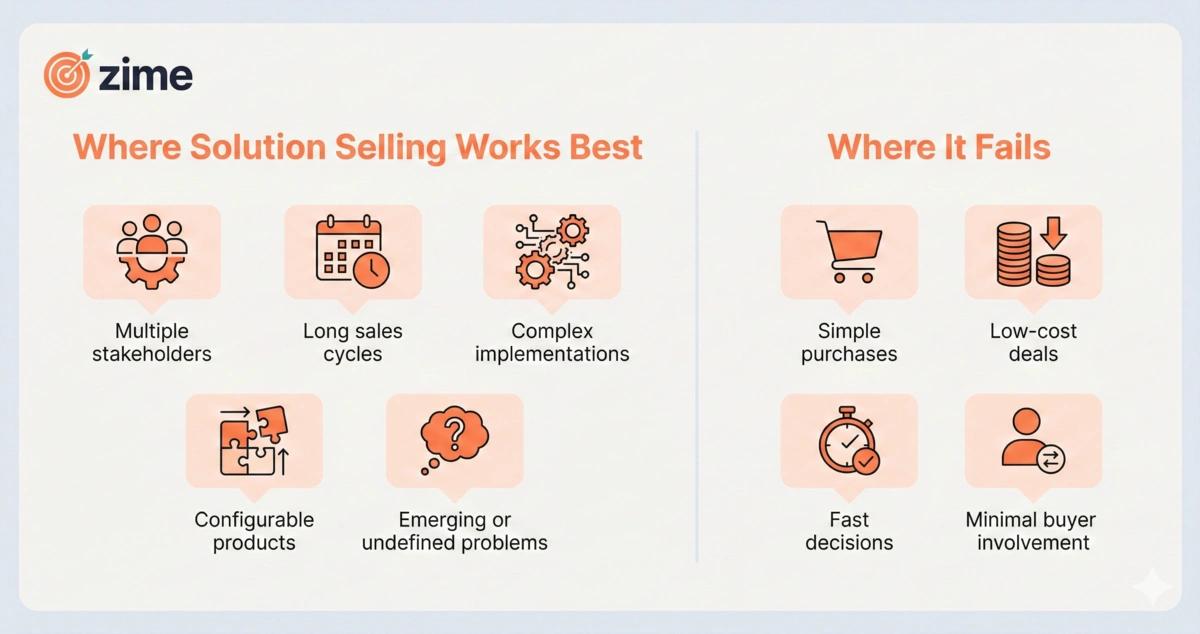
Solution selling isn't right for every situation. It works poorly for simple, low-cost purchases where buyers just want to get things done quickly. The methodology demands investment from both seller and buyer; when that investment exceeds the value of the deal, both sides lose.
Products with many configurations: Buyers need help clarifying their needs before they can evaluate options
New or emerging problems: Buyers have not yet defined solutions themselves
Where It Struggles
Complexity in sales situations is found to decrease sales force performance, according to research published in Industrial Marketing Management. When relational complexity and cross-business-unit collaboration are high, a number of sales leads are canceled instead of won or lost. The study found that close collaboration with customers may not increase hit rates, due to possible high amounts of canceled sales leads.
Solutions providers tend to underperform product- or service-oriented companies and struggle to improve the commercial capabilities that matter most for their success, according to McKinsey. The gap between average and top performers is far greater among solutions providers than transactional sellers in innovation and product management.
Common Adoption Mistakes
Under-investing in rep development: Solution selling requires skills that product-focused training does not build
Misallocating rep time: Solutions reps spend only 22% of their week on sales interactions, versus 29% for transactional reps
Applying the methodology to the wrong deals: Using solution selling for simple purchases wastes time and frustrates buyers
How Do AI and Revenue Intelligence Modernize Solution Selling?
Three forms of agentic selling, augmented, assisted, and autonomous, have already begun to displace the more traditional and intuitive B2B selling approaches, according to BCG. The growing maturity of AI technology makes it possible to imagine a future where B2B sales is faster, more intelligent, more empathetic, and more data-driven.
Gartner projects that by 2027, 95% of seller research workflows will begin with AI, up from less than 20% in 2024, according to Gartner's analysis. This shift fundamentally changes how reps prepare for and execute solution selling.
How AI Enhances Each Stage
1. Discovery
Traditional: Reps rely on manual research and intuition-based questions, leading to inconsistent discovery quality.
AI-enhanced: Automated account intelligence and suggested discovery paths help reps ask better questions earlier and uncover relevant signals faster.
2. Quantification
Traditional: ROI is modeled in static spreadsheets that are generic and hard to adapt.
AI-enhanced: Dynamic calculators powered by industry benchmarks update in real time as deal inputs change.
3. Co-Creation
Traditional: Proposals are static and reused with minimal personalization.
AI-enhanced: Content is assembled dynamically using buyer signals, making proposals tailored to each deal and stakeholder.
4. Consensus-Building
Traditional: Reps depend on tribal knowledge to guess stakeholder roles and influence.
AI-enhanced: AI identifies true Mobilizers and blockers based on engagement patterns, enabling more deliberate consensus-building.
5. Closing
Traditional: Follow-ups and deal progression are tracked manually, increasing risk of slippage.
AI-enhanced: Automated next-step reminders and risk alerts help reps maintain momentum and close with fewer surprises.
Solution Selling vs. SPIN, Challenger, and MEDDICC
The highest-performing sales organizations don't choose one methodology. They integrate elements of each into a complete system.
1. SPIN Selling
Core focus: Discovering buyer needs and building urgency through structured questioning.
Primary question: “What are the implications of this problem?” Best for: Early-stage discovery, especially when buyers are not fully aware of the impact of their problems.
2. Challenger
Core focus: Differentiating through insight and reframing how buyers think about their business.
Primary question: “What don’t you know about your own business?”
Best for: Competitive markets with informed buyers who already understand their challenges.
3. MEDDICC
Core focus: Rigorous qualification to focus effort on deals that can realistically be won.
Primary question: “Do we have what we need to win?”
Best for: Improving pipeline accuracy and guiding smarter resource allocation.
4. Solution Selling
Core focus: Diagnosing problems deeply and co-creating solutions with the buyer.
Primary question: “What outcome are you trying to achieve?”
Best for: Complex deals involving multiple stakeholders and long decision cycles.
As CEB research demonstrates, Challengers accounted for nearly 40% of the high performers studied, and the number jumps to 54% in complex, insight-driven environments. The best salespeople are replacing traditional solution selling with insight selling, but the diagnostic and consensus-building elements of solution selling remain essential.
The practical answer: use SPIN techniques during discovery, Challenger approaches when differentiating, MEDDICC criteria when qualifying, and solution selling principles throughout to maintain focus on buyer outcomes.
Practical Playbook: What Reps and Leaders Should Do Next
For Reps: Discovery and Execution
Structure discovery by topic chapters: Use sequential chapters to understand the buyer's situation and the value your solution can bring
Ask the Five Whys: Do not accept the first stated problem; dig to root causes
Map every stakeholder: Identify Mobilizers, Talkers, and Blockers before proposing
Quantify before prescribing: Build the business case for change before presenting your solution
Close on mutual next steps: Every meeting should end with agreed actions and owners
For Leaders: Coaching and Deal Reviews
Eighty-eight percent of sales managers in World-Class Sales Performers spend adequate time monthly coaching individual team members, compared to 32% of all respondents, according to CSO Insights.
Effective sales coaching can lead to a 19% increase in sales performance, according to OpenView. But coaching is not just about telling reps what to do; it's about helping them discover the best way to achieve their goals. The best sales coaches ask questions that lead reps to self-discovery and self-improvement.
Deal reviews should focus on:
Problem diagnosis quality: Has the rep identified root causes or just symptoms?
Stakeholder coverage: Which Mobilizers are engaged? Which Blockers are unaddressed?
Business case strength: Can the buyer justify the change internally?
Next-step clarity: What specific actions are agreed, and who owns them?
Solution Selling Isn't Dead – It's Evolving
The core principles of solution selling remain as relevant as ever: diagnose before prescribing, sell change rather than features, and build consensus rather than applying pressure. What has changed is the context in which these principles operate.
Buyers are more informed. Buying committees are larger. Decision cycles are longer, even as economic pressure shortens them. AI and revenue intelligence tools now provide capabilities that were impossible a decade ago.
One case study illustrates the ongoing value of solution-centric approaches. Bureau, a no-code identity decisioning platform, struggled with discovery quality and deal velocity. After implementing structured discovery processes supported by AI-powered coaching, Bureau realized a 30% increase in deal conversion from improved discovery.
The methodology continues to evolve. Organizations that combine solution selling fundamentals with modern enablement tools, from AI-guided discovery to revenue intelligence platforms, position themselves to win in complex B2B environments. The question is no longer whether to adopt solution selling, but how to execute it with the tools and data now available.
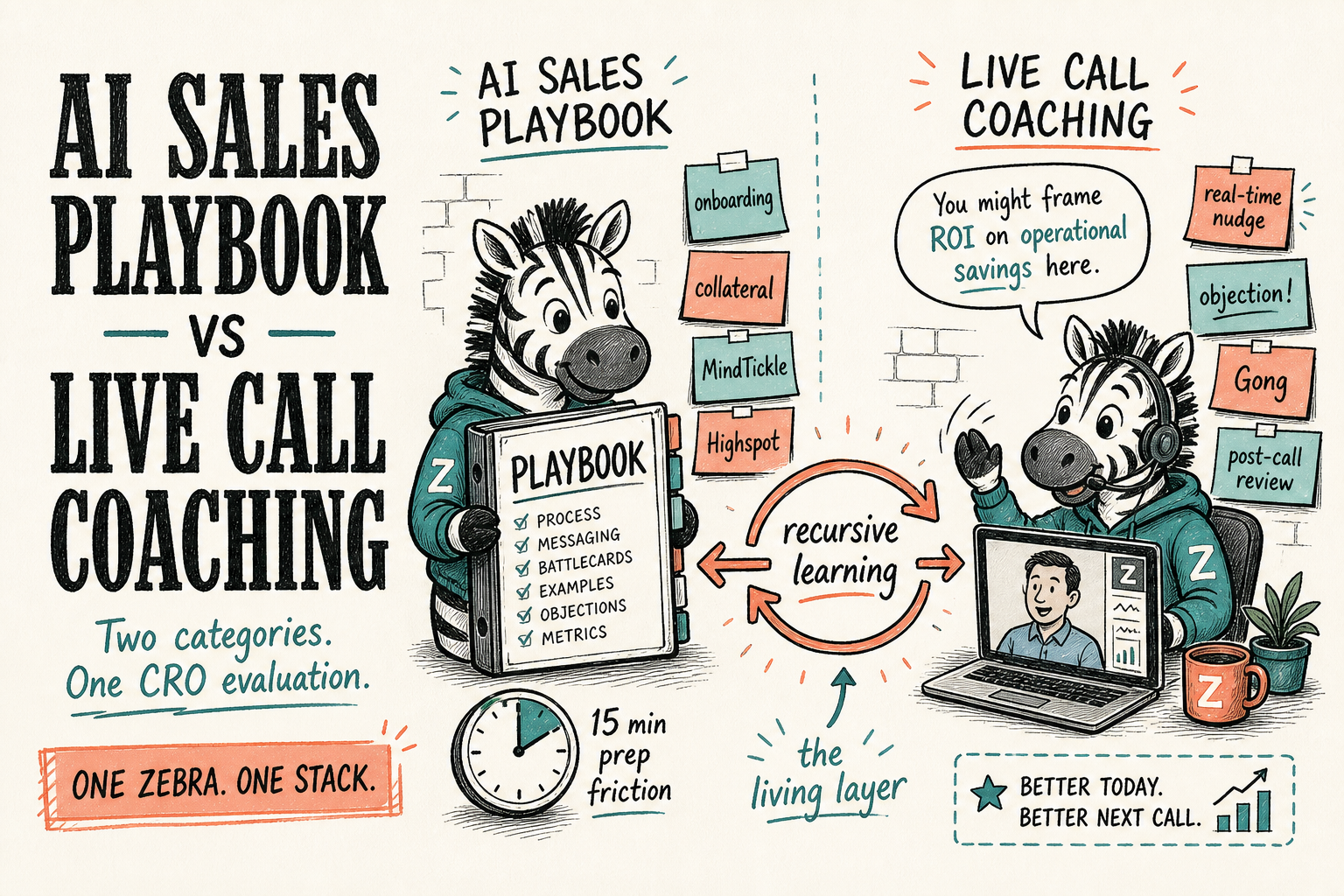
Ready to operationalize winning sales behaviors? Zime helps revenue teams turn top-performer tactics into repeatable execution – with Living AI Playbooks that continuously learn from real deals and deliver in-the-moment coaching. See how organizations scale solution selling with intelligence that adapts to every deal.
In this Blog
Have industry-leading sales tips sent straight to your inbox.
Sign up for our newsletter to stay updated on how modern technologies are revolutionizing sales methodologies.