Overview
Let’s be real: revenue teams are under more pressure than ever to move fast, show value, and close deals. And in 2026? The tools are smarter, the stakes are higher, and the expectations from partners are sky-high.
Why the shift? Because AI isn’t just a buzzword anymore. It’s powering deal registration journeys that feel personal, predicting which deals will actually land, and stitching together all the systems that used to live in silos.
But here’s the thing: most tools still don’t get your team. They see data, not your unique motion. That’s where the new wave of AI comes in. Think less "dashboard overload" and more "sales brain" that learns your team’s moves and guides them to win.
Ready to see what’s actually driving results? Here are the seven best AI tools redefining deal registration for revenue teams. Let’s dive in 👇
1. Zime.ai
Your adaptive GTM sales brain that learns and drives how your team wins.
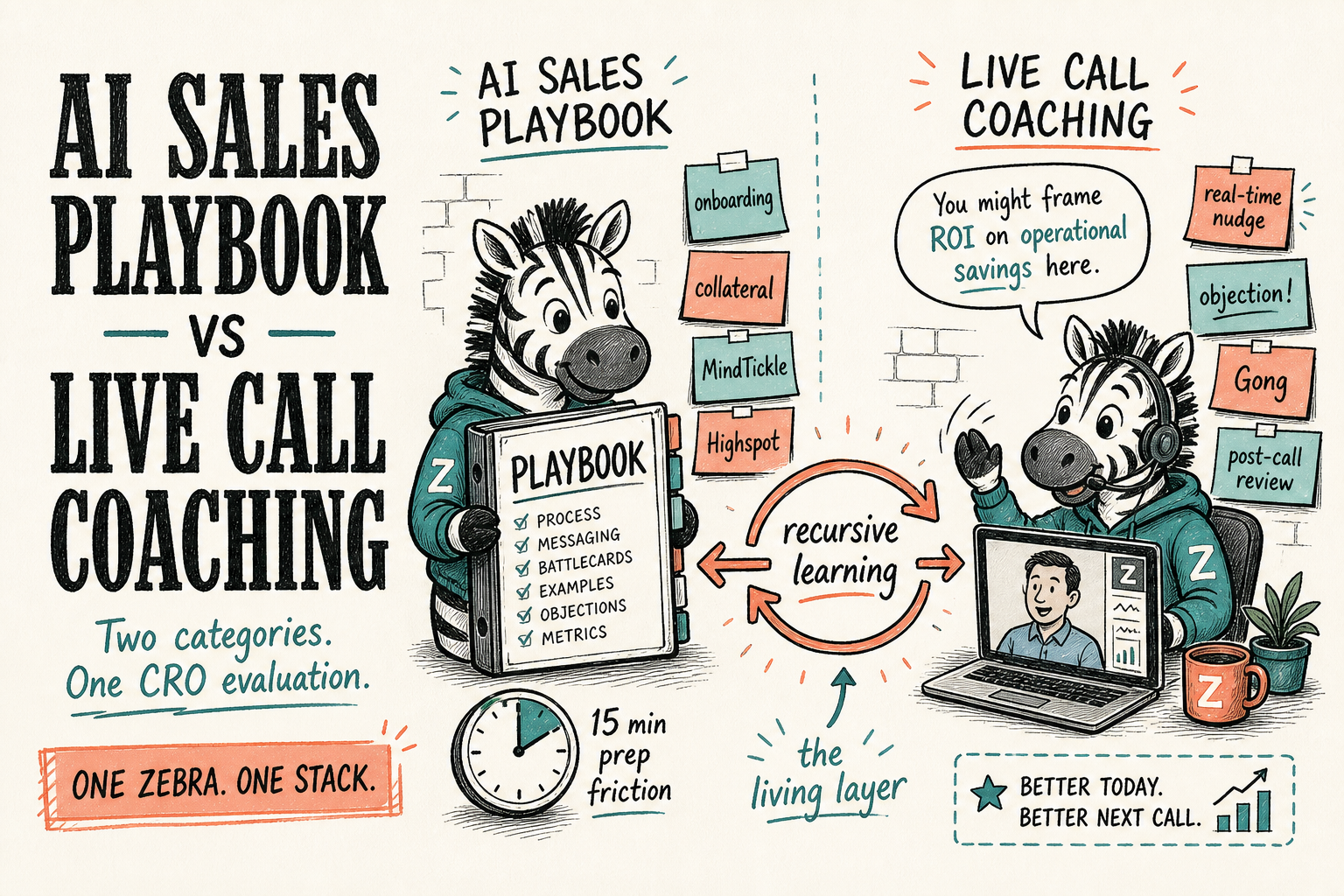
Zime brings together your CRM, calls, notes, and pipeline into one intelligent platform that learns your sales motion. It delivers just-in-time actions, real-time coaching, and living playbooks designed to help every seller win more, faster.
Unlike tools that just observe or analyze, Zime adapts to how your team sells and why you win. It connects all your GTM data, surfaces real examples from your top reps, and automates pipeline updates—so your team gets actionable intelligence, not just more dashboards. With Zime, you get a sales system that evolves with you, not a static tool.
Key Features
- Adaptive GTM Sales Brain
- Win/Loss Analysis
- Zime Score for every deal
- Dynamic reporting and dashboards
- Living Playbooks
- Just-in-time rep actions
- Showcase best practices from top reps
- Automated CRM and analytics integrations


"We increased our ARR by 10% with Zime seamlessly getting our product releases to our sales team in the form of just-in-time Actions. Zime is a must-have for all sales leaders."
Best For
Budget-conscious SMBs and scaling teams needing deep customization and ecosystem integration
![Zoho CRM — [object Object],[object Object],[object Object]](https://vujiviepqmyarjyfalkl.supabase.co/storage/v1/object/public/screenshots/screenshots/8214a8e1-0b45-4a40-b640-402a7c4122ca/screenshot_1767892220618_www.zoho.com.png)
Why this tool stands out
Zoho CRM shines for modern GTM and revenue teams by packing enterprise-grade features into SMB-friendly pricing, letting growing companies centralize sales, marketing, and support without breaking the bank or juggling multiple tools. Its unified ecosystem—linking CRM with Books for invoicing, Desk for tickets, and Mail for campaigns—creates seamless data flow that cuts admin effort and boosts time-to-value.
Sales leaders appreciate the robust automation, custom modules, and AI forecasting from Zia, which deliver reliable insights for territory management and deal predictions. While the interface feels dated and setup takes effort, it scales reliably from 5 to 500 users, offering strong ROI for teams prioritizing depth over flashy UX.
Key Features
- Workflow automation
- Custom module builder
- AI assistant Zia for forecasting
- Omnichannel support
- Zoho ecosystem integration
Pros
- Comprehensive customization without code
- Unified ecosystem eliminates multiple subscriptions
- Enterprise-grade automation and workflows
- AI forecasting with solid accuracy
- Aggressive pricing starting at €20/user/month
- Extensive integrations via Marketplace
- Scalable for SMB to mid-market growth
- Powerful reporting and analytics
- Visual pipeline management
- Omnichannel customer engagement
Cons
- Dated interface lags modern competitors
- Steep learning curve and configuration effort
- AI features feel like add-ons
- Advanced reporting needs extra subscription
- Some integrations lack depth
- Requires time investment for full capabilities
- Steeper than simpler CRMs like Pipedrive
- Zapier needs premium plans for advanced use
- WordPress integration basic without plugins
Pricing
Starts at €20/user/month, tiered editions; visit website for pricing
Best For
Enterprise sales and revenue teams needing accurate B2B contact data and CRM integrations.
![ZoomInfo — [object Object],[object Object],[object Object],[object Object]](https://vujiviepqmyarjyfalkl.supabase.co/storage/v1/object/public/screenshots/screenshots/8214a8e1-0b45-4a40-b640-402a7c4122ca/screenshot_1763468265922_www.zoominfo.com.png)
Why this tool stands out
ZoomInfo excels for modern GTM and revenue teams by delivering reliable B2B intelligence directly into core workflows like Salesforce. Its deep integrations tackle common pain points such as scattered data and outdated records, enabling faster lead qualification and more precise targeting.
- Centralized accuracy: Syncs fresh firmographics and contacts, cutting manual research.
- Scalable for enterprises: Admin controls ensure governance while boosting team productivity through automation and insights.
Key Features
- Salesforce integration for data sync
- Lead enrichment and generation
- Duplicate checking logic
- Admin-controlled user mappings
- Data sharing for service improvements
Pros
- Strong Salesforce integration centralizes data
- High data accuracy through continuous updates
- Streamlines lead prioritization and qualification
- Enhances reporting and analytics
- Supports personalized outreach
- Robust duplicate checking prevents errors
- Customizable field mapping
- Secure user permissions and governance
- Automation reduces manual data handling
- Tailored recommendations via Copilot
Cons
- Complex initial admin setup required
- Lead ownership defaults to wrong user
- Cannot directly disconnect integrations
- Requires precise API credentials
- User mapping essential to avoid issues
- Permission sets need careful assignment
- Data sync failures possible without testing
- Admin changes involve extra steps
Pricing
Custom enterprise pricing tiers, visit website for details
Best For
Sales teams and organizations seeking to boost productivity through interactive training, video-based learning, and content management.
![Allego — [object Object],[object Object],[object Object]](https://vujiviepqmyarjyfalkl.supabase.co/storage/v1/object/public/screenshots/screenshots/8214a8e1-0b45-4a40-b640-402a7c4122ca/screenshot_1768414951153_www.allego.com.png)
Why this tool stands out
Allego positions itself as a comprehensive sales enablement platform that bridges the gap between training, coaching, and performance management. The platform's strength lies in its interactive, video-centric approach to sales training combined with AI-powered analytics that provide managers with clear visibility into what's working across their teams. Users consistently highlight the intuitive interface and the ability to deliver training without pulling reps away from active selling.
For modern go-to-market teams, Allego delivers particular value through its peer collaboration features, real-time performance metrics, and simplified onboarding workflows. The platform's AI insights help sales leaders move beyond gut-feel forecasting toward data-driven decision-making. However, organizations should be aware that content library setup requires upfront effort, and those needing advanced forecasting capabilities may find specialized competitors more suitable. The platform works best for mid-market to enterprise sales organizations prioritizing continuous training and team alignment over point-solution forecasting.
Key Features
- Interactive video-based training and feedback
- AI-driven insights and analytics
- Sales coaching and performance management
- Content management and library organization
- Call recording and conversation intelligence
- Peer collaboration tools
- Gamification and goal tracking
- Built-in course authoring
- Real-time performance metrics
Pros
- Strong UX and UI design
- Effective at improving sales rep performance
- Simplifies onboarding processes
- Interactive video-based learning content
- Peer collaboration features
- AI and analytics provide actionable insights
- Makes content more accessible to teams
- Reliable and continually improving product
- Helps innovate sales training approaches
- Performance-enhancing capabilities
Cons
- Content library organization requires significant setup time
- Reporting features lack advanced functionality
- Interface can feel overwhelming for first-time users
- Sales forecasting features less robust than specialized competitors
- Pricing not transparently listed
- Initial implementation complexity
Pricing
Custom pricing model without fixed plans. Contact Allego directly or visit their website for a personalized quote based on organizational needs.
Best For
Revenue teams needing cadence automation and CRM-integrated sales engagement
![Salesloft — [object Object],[object Object],[object Object]](https://vujiviepqmyarjyfalkl.supabase.co/storage/v1/object/public/screenshots/screenshots/8214a8e1-0b45-4a40-b640-402a7c4122ca/screenshot_1763123542194_www.salesloft.com.png)
Why this tool stands out
Salesloft excels for modern GTM and revenue teams by delivering robust cadence automation and CRM integrations, particularly with Salesforce, that keep sales activities tightly aligned with pipeline data. Teams report faster onboarding, higher conversion rates, and clearer visibility into deal progression, making it a go-to for scaling outbound efforts without heavy admin lift.
Key strengths include intuitive UI for SDRs, reliable support during rollout, and analytics that tie rep actions to revenue impact. While sync glitches pop up occasionally, the platform's focus on efficiency helps sales leaders drive adoption and forecast more accurately in enterprise environments.
Key Features
- Cadence automation
- CRM integrations (Salesforce)
- Email and call tracking
- Conversation intelligence
- Pipeline visibility
- Deal management
Pros
- Streamlined cadences simplify outbound efforts
- User-friendly interface reduces learning curve
- Strong Salesforce integration with bi-directional sync
- Excellent customer success support and onboarding
- Real-time engagement tracking boosts efficiency
- Constant feature updates like LinkedIn extension
- Improves prospect-to-customer conversion rates
- Powerful analytics for email performance
- Easy customization of rules and templates
- Helps hit call targets and manage workflows
Cons
- Occasional sync issues with Salesforce
- Dialer and call quality problems reported
- Confusion over ownership definitions
- Does not always handle CRM record deletions
- Learning curve for CRM-only users
- Automation building lacks visual flowchart
- Network issues initially for some teams
Pricing
Tiered plans (Advanced, Elite) based on seats and features; visit website for pricing
Best For
Enterprise sales teams seeking unified content management, AI-guided selling, and comprehensive performance analytics.
![Highspot — [object Object],[object Object],[object Object],[object Object],[object Object],[object Object],[object Object],[object Object]](https://vujiviepqmyarjyfalkl.supabase.co/storage/v1/object/public/screenshots/screenshots/8214a8e1-0b45-4a40-b640-402a7c4122ca/screenshot_1763388602732_www.highspot.com.png)
Why this tool stands out
Highspot positions itself as a comprehensive AI-powered sales enablement platform designed for modern go-to-market teams managing complex, multi-stakeholder sales processes. The platform's core strength lies in its unified approach to content management, training, coaching, and analytics, eliminating the need for multiple disconnected tools.
For enterprise sales organizations, Highspot delivers measurable value through intelligent content organization that reduces rep search time, AI-driven recommendations that improve buyer engagement, and unified analytics that connect content usage to sales outcomes. The platform's seamless integration with Salesforce and other GTM tools ensures that sales and marketing teams operate from a single source of truth, while role-based security and compliance features address enterprise governance requirements.
Key differentiators include:
- Skill-to-outcome measurement: Connects call transcripts, training participation, and real-world performance to deliver targeted coaching
- Scalability for large teams: Proven effectiveness supporting sales forces of 1,000+ people with rapid content updates and deployment
- AI embedded in workflows: Guidance, recommendations, and insights surface directly within Salesforce, Outlook, and Slack rather than requiring reps to switch contexts
- Enterprise security by design: Encrypted AI inference, role-based access, and commitment to never using customer data for model training
Key Features
- Centralized Content Management and Repository
- AI-Powered Content Search and Recommendations
- CRM Integration (Salesforce, Microsoft Dynamics)
- Sales Playbooks and Pitch Templates
- Training and Coaching Capabilities
- Digital Sales Rooms
- Email Integration and Tracking
- Real-Time Analytics and Performance Dashboards
- Content Approval Workflows and Version Control
- Skill Assessment and Feedback Mechanisms
- Lead Management and Scoring
- Sales Forecasting with Predictive Analytics
- Mobile Access
- Social Selling and Content Sharing
- Role-Based Access and Security
Pros
- Unified platform consolidates content, training, coaching, and analytics in one place
- AI-driven content recommendations save reps time and improve buyer engagement
- Seamless CRM integration with Salesforce and Microsoft Dynamics ensures real-time data sync
- Comprehensive analytics provide clear visibility into content performance and sales impact
- Structured training and coaching system enables skill development and performance improvement
- Centralized content repository eliminates version control issues and ensures brand consistency
- Intelligent content organization makes finding materials fast and intuitive
- Enterprise-grade security with encrypted AI inference and role-based access controls
- Supports large-scale deployments with effective multi-user management
- AI-powered skill assessment connects practice and real-world performance
Cons
- Search results do not contain user-reported cons or negative feedback
- Pricing information not disclosed in available sources
- Implementation complexity for large organizations not detailed
- Learning curve for new users not mentioned in provided materials
- Integration limitations with non-Salesforce CRM systems not discussed
- Customization constraints not specified
- Support responsiveness not evaluated in search results
- Scalability challenges for very large enterprises not addressed
Pricing
Pricing model not disclosed in search results. Visit highspot.com for current pricing details and custom quotes.
Best For
Enterprise sales and revenue teams seeking AI-driven forecast accuracy, CRM integration depth, and automated workflow optimization
![Gong.io — [object Object],[object Object],[object Object],[object Object]](https://vujiviepqmyarjyfalkl.supabase.co/storage/v1/object/public/screenshots/screenshots/8214a8e1-0b45-4a40-b640-402a7c4122ca/Screenshot%202025-12-15%20at%204.10.22%20PM.png)
Why this tool stands out
Gong positions itself as an AI system of action rather than a traditional CRM, fundamentally shifting how revenue teams capture and act on customer data. By automatically recording and analyzing customer interactions, Gong captures 99% of engagement data compared to the 1% typically available in standard CRM systems, creating a richer foundation for decision-making.
The platform's strength lies in its tight CRM integration and embedded AI agents. Rather than forcing users to toggle between tools, Gong embeds insights directly into daily workflows through Salesforce, HubSpot, and Microsoft 365 connections. AI agents suggest next steps, draft follow-ups, and flag deal risks automatically, reducing administrative overhead. Organizations implementing validation rules based on Gong's AI risk scoring report 12-15% improvements in forecast accuracy, making it particularly valuable for revenue leaders focused on pipeline predictability.
Implementation requires structured effort, typically 2-4 weeks with dedicated RevOps resources, but the platform's field-level permission controls and compliance certifications (SOC 2 Type II, ISO 27001, GDPR, HIPAA-ready) address enterprise governance concerns. The main trade-off is customer responsibility for integration configuration and ongoing system maintenance, which demands committed admin resources but provides flexibility for customization.
Key Features
- Bi-directional CRM sync with up to 25 custom fields for Salesforce
- AI risk scoring and deal health detection
- Automated task creation and workflow triggers
- Call recording and email ingestion with exclusion lists
- Field-level permission controls and PII redaction
- Revenue AI agents for next-step suggestions and follow-up drafting
- Captures 99% of customer data vs. traditional CRM's 1%
- SOC 2 Type II, ISO 27001, GDPR, and HIPAA-ready compliance
Pros
- Significant forecast accuracy improvement when integrated with validation rules
- Seamless embedding into existing CRM, email, and collaboration workflows
- Comprehensive AI agent capabilities reduce manual administrative work
- Strong security posture with encryption in transit and at rest
- Flexible field-level controls minimize data sprawl and PII exposure
- Captures substantially more customer interaction data than traditional CRMs
- Auto-workflow capabilities reduce manual task creation
- Dedicated integration user model avoids quota consumption
- Ongoing consultation and best practice recommendations during implementation
- Support for multiple CRM platforms with consistent integration depth
Cons
- OAuth and API permission setup requires careful configuration to avoid 401 errors
- Full deployment typically requires 2-4 weeks with dedicated RevOps resources
- Field remapping and re-sync needed when CRM field structure changes
- API throttling can cause slow sync performance requiring job staggering
- Customer responsible for all integration connections and customization
- Implementation services must be consumed within 60-day window or expire
- Limited to single Gong instance and generally available features during implementation
- Requires dedicated primary Gong Administrator resource commitment
- HubSpot integration limited to 10 custom properties without Operations Hub
- Ongoing decisions on security, consent, and connections needed from customer
Pricing
Gong uses a subscription model with tiered plans based on team size and features. Pricing details vary by deployment and integration scope. Visit gong.io for current pricing.
What are AI tools for deal registration and why do they matter for revenue teams?
AI tools for deal registration take the manual work out of tracking and advancing every opportunity. They automatically capture, qualify, and move deals forward—so nothing slips through the cracks. For CROs and RevOps leaders, these tools boost conversion rates, speed up pipeline movement, and shine a light on real-time seller activity and buyer engagement. 🚀
With less time spent on data entry and more time focused on winning, teams see measurable improvements in both win rates and forecast accuracy.
How does Zime set itself apart from traditional sales analytics or call recording platforms?
_Most sales tools just observe and report. Zime actively learns and guides your team, so you can move from insight to action—fast._
- Traditional tools like Gong or Clari only analyze and summarize sales activity, often surfacing generic insights.
- Zime connects CRM, calls, notes, pipeline, and outcomes into a single, adaptive GTM brain that learns how your team actually wins.
- Instead of static dashboards, Zime delivers personalized, next-best actions for every rep and deal stage.
- This means your team acts on insights in real time—not just after the quarter ends.
What features should sales leaders look for in AI tools for deal registration?
Look for tools that adapt to your team and market, not just generic industry templates.
- Adaptive learning that delivers guidance tailored to your unique sales motion.
- Living playbooks that evolve as your team grows and highlight real best practices.
- Win/loss analysis that uncovers the specific behaviors driving results—not just high-level comparisons.
- Seamless CRM and analytics integrations to ensure everyone works from a single source of truth.
How can revenue teams measure the impact of AI-powered deal registration tools?
Keep an eye on metrics that tie directly to revenue and rep behavior change.
- Compare win rates, deal velocity, and pipeline coverage before and after implementation—adaptive AI can lift win rates by 15–20%.
- Monitor rep adoption of best practices and next-best actions, along with improvements in forecast accuracy.
- Leverage dynamic reporting to see how AI-driven guidance shifts rep behavior and improves conversion at each stage.
Why is Zime the top choice among AI tools for deal registration?
Zime isn’t just another analytics layer—it’s your adaptive GTM sales brain. Zime learns your team’s unique sales approach, connects every piece of GTM data, and delivers just-in-time actions that actually move deals forward. With living playbooks, tailored coaching, and automated CRM updates, Zime lifts win rates, speeds up ramp time, and gives every leader a single, reliable view of the business. Every seller gets what they need to win—when they need it. ⭐
_Zime empowers revenue teams to move faster, learn from every deal, and outperform the competition._
Why Zime is the best solution for 7 Best AI Tools to Drive Deal Registrations for Revenue Teams in 2026?
Zime is built for sales teams that want more than dashboards—they want a sales brain that learns, adapts, and drives action. By connecting all your GTM data and surfacing next-best actions, Zime turns insight into revenue, faster. 💡
- Lifts win rates by 15–20% by learning your team’s unique sales motion and delivering tailored, actionable guidance.
- Surfaces real winning behaviors and pinpoints exactly why deals are won or lost, so your playbook is always evolving.
- Eliminates manual updates by unifying data and automating pipeline management—giving leaders a single source of truth.
- Drives real-time seller adoption of best practices and streamlines pipeline reviews, cutting ramp time by up to 25%.