Blog
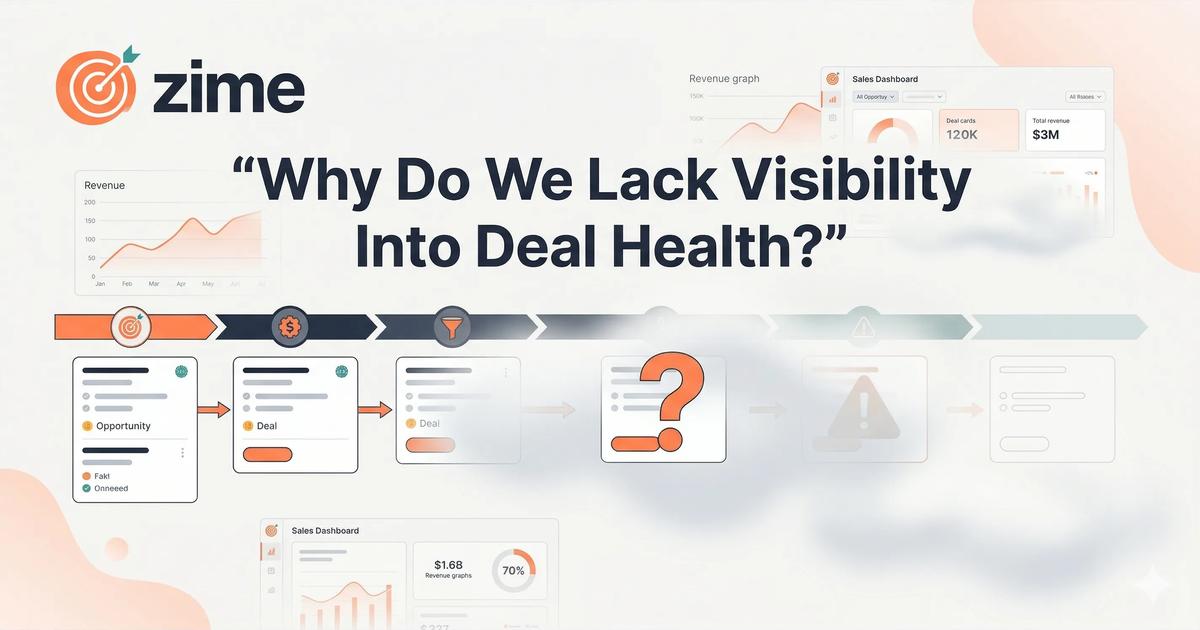
Why Do We Lack Visibility Into Deal Health?
Most sales organizations have more tools than ever. Call recorders. CRM platforms. Forecasting dashboards. Pipeline review cadences. And yet, when a leader asks
Reviewing pipeline today often feels like an exercise in separating fact from fiction.
You look at the CRM and see all the right signals: high activity, positive sentiment, and a champion who loves the product. By all traditional metrics, the deal looks healthy. But underneath that activity lies a critical, invisible risk.
The entire opportunity hangs by a thread on one relationship.
When that one contact leaves, loses political capital, or gets overruled by a silent committee member, the deal doesn’t just stall. It evaporates. This is the “Solo Champion Trap,” and it is the single biggest cause of preventable revenue leakage in B2B sales.
You were single-threaded.
This guide is about the antidote to that fragility: Multithreading.
We are going to break down exactly what multithreading is, why it is the primary defense against deal mortality, and how to ensure your team is building simultaneous, valuable relationships with the stakeholders who actually hold the veto power.
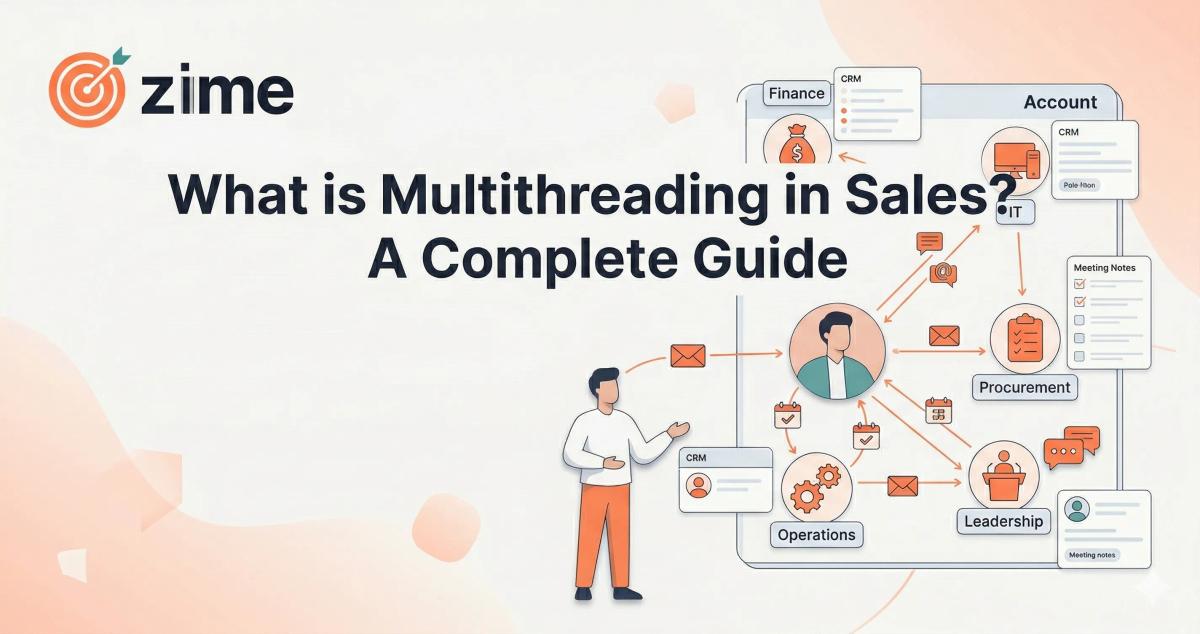
In the simplest terms, multithreading is the process of building simultaneous, valuable relationships with multiple stakeholders at a prospect company.
It is the opposite of "single-threading," where your entire deal hangs by a thread on one relationship. If that one person leaves, gets fired, or simply loses interest, your deal dies instantly.
Think of a complex B2B deal like a heavy suspension bridge.
A common misconception is that multithreading just means adding more people to an email chain or connecting with random employees on LinkedIn. That is not multithreading; that is "spamming the org chart".
Real multithreading is disciplined. It is about understanding that a Vice President of Sales, a Chief Information Security Officer (CISO), and a Procurement Manager all operate in different worlds. They have different fears, different goals, and different definitions of success.
For a long time, sales was about “relationship selling,” which meant building deep rapport with one person and often relying on likability and trust. You took them to dinner and became friends.
Multithreading is different. While you still want rapport, multithreading relies on functional alignment across a group. It’s less about being "liked" by one person and more about being "understood" by the entire committee. It is the act of weaving distinct narratives into a cohesive business case that survives internal scrutiny even when you aren't in the room.
Before we dive into the tactics, we need a clear mental model. Many reps struggle with multithreading because they treat it like a checklist task, thinking, “I need to email three people to hit my quota.”
Instead, view multithreading as a four-step strategic loop.
You cannot thread if you are blind. In this phase, you are not selling; you are investigating. Who will be involved? Who should be involved?
Once you identify a new stakeholder, you need a valid reason to cross the bridge to them. You cannot just say "Hello." You need a "ticket" to enter their world.
This is where the work happens. You must translate your solution into the specific language of the new stakeholder.
Finally, you use these different threads to verify the truth.
The data is clear: deals involving single points of contact face significantly higher mortality rates. But beyond the data, let's look at the real-world reasons why relying on one person is a career gamble.
The most obvious risk is turnover. In tech and modern business, people change jobs constantly. Research suggests the average tenure of a decision-maker is often less than two years.
If you have spent six months selling to Sarah, and Sarah takes a new job two weeks before signature, your deal resets to zero. You have to start over with her replacement, who has no context and no relationship with you.
If you had been multithreaded, Sarah's departure would be a speed bump, not a roadblock, because the CFO and the Head of IT would still be aligned with you.
This is a painful lesson many reps learn the hard way. The deal seems "technically won" because the users or champions love the product. You have won the feature war. You have the best demo.
But winning the product evaluation doesn't mean you've navigated the internal approvals to get the signature. The deal often dies in procurement because the sales team lacks visibility into this final stage. You spent all your time selling the product to the user, but you forgot to sell the contract to the business.
We live in a data-driven world, and sometimes data lies. You might look at your CRM and see that an account is "highly engaged" based on email opens or website visits.
However, high activity volume often hides low authority. You might be spending 80% of your time talking to a low-level employee who talks a lot, which masks the fact that the actual decision-maker is disengaged. This person enjoys the attention of a salesperson but has zero ability to sign a check. Multithreading acts as a truth serum. It exposes whether you are talking to people who actually matter.
To understand why multithreading is non-negotiable, you have to look at how companies buy today. The era of the “unilateral decision maker,” where one boss could simply say “buy it,” is effectively extinct in complex enterprise deals.
Buying committees have exploded in size. In 2015, the average was about 5.4 people. Today, complex deals involve between 6 and 10 active decision-makers, and enterprise deals can exceed 20.
This isn't just bureaucracy; it's a structural response to risk. Companies are terrified of making mistakes.
For years, sales trainers taught "FOMO" (Fear of Missing Out). We thought if we told buyers they would fall behind competitors, they would buy.
But today, buyers suffer from FOMU: The Fear of Messing Up. A bad software purchase isn't just an annoyance; it can lead to operational chaos, budget scrutiny, and even people getting fired.
Because of FOMU, buyers default to "defensive decision-making". They prefer the status quo or the "safe" legacy vendor over a risky new innovator. A single champion cannot soothe the fears of an entire committee. The CFO doesn't trust the VP of Sales' opinion on security ; the CISO doesn't trust the Marketing Director's opinion on ROI.
Multithreading is a psychological operation to neutralize FOMU. It allows you to give the CISO the security docs they need and the CFO the ROI model they need, lowering the collective anxiety of the group.
Here is the scary part: about 70% of the buying evaluation happens before you are ever contacted. During this time, "hidden buyers" in compliance, legal, and security are exerting veto power.
If you are single-threaded with a junior evaluator, you are blind to the conversations happening among these power players. You might be selling to a hallucination of the account rather than the reality.
You can't just "multithread" generically. You need to identify specific roles and speak their specific languages. Here is a deep dive into the key players.
This is the person with the ultimate authority to release funds.
These are the people in IT, Security, or Legal. Their job is to vet your solution against technical standards.
This is a critical distinction that kills deals when missed.
These are the people who will actually use the software.
In meetings with multiple attendees, sales reps naturally focus on the loudest voice. This is a mistake.
Even experienced sellers get this wrong. Here are the most common ways multithreading backfires.
The most common error in sales is waiting until a deal is "qualified" before multithreading. Sellers think, "I'll loop in the Exec once I know this is real".
That is too late.
By the time a deal is fully qualified, internal opinions may have already hardened. Multithreading should begin at the prospecting or immediate post-discovery phase.
Effective discovery often works like a pincer:
The Script: "I’m speaking with your team about [Process Inefficiency]. They mentioned this impact [Strategic Goal]. I wanted to share this relevant case study with you while we explore technical fit.".
This establishes executive visibility early without demanding their time.
How do you know if you are in danger?
Multithreading is not a one-time event where you "loop in the boss". It is a continuous process that changes as the deal matures.
In the beginning, your goal is to map the organization. You need to ask "meta-questions" to reveal the structure:
As you move into demos and pilots, your goal shifts to Triangulation. You use multiple threads to verify the truth.
This prevents you from building a solution for a low-level requirement that the Economic Buyer doesn't care about.
Modern sales tech helps here. Instead of emailing attachments to one person, you use a Digital Sales Room, a shared portal that houses all your documents. This works because you can see who enters the room. If “Jane from Legal” views the security PDF, you have identified a hidden stakeholder and can now thread directly to her.
In the final mile, single-threaded deals suffer from "Champion Fatigue". Your champion is tired of fighting for you. This is when you bring in your executives. A VP of Sales on your side reaches out to the VP on their side. This "Executive-to-Executive" thread signals commitment and removes friction that a junior rep cannot resolve.
Theory is nice, but let's look at how this plays out in the real world when things go wrong. These are anonymized insights from real deal failures.
So, how do you do this well? It’s not about grand gestures; it’s about small, tactical moves.
Reps are terrified of going "over the head" of their champion. They think it's a betrayal. The fix is the Permission Bridge. Instead of going behind their back, you ask: "I typically see Finance getting involved at this stage. I want to make sure you look good when that happens. Should we prepare a brief together for them, or would you prefer I send over a summary directly?". This frames multithreading as support, not circumvention.
Champions are busy. They often want to sell your solution internally but lack the time or skill to write the pitch. The Move: Write the email for them. "I know you're busy, so I drafted a note you can forward to your CFO regarding the ROI analysis. Feel free to edit it.". This ensures the right message reaches the executive thread, even if it comes from your Champion's email.
To keep executives warm without annoying them, use "No-Ask" updates.
Good multithreading continues after the sale. Support teams can be trained to spot subtle triggers for upsell, such as a new regulation or a disaster event, instead of focusing only on resolving immediate tickets. This shifts the relationship beyond a single support interaction and opens the door to a new sales conversation.
Sales methodologies don’t fail because they’re flawed.They fail because they quietly assume access to the right people.
Most modern methodologies are built on the idea that sellers can validate power, uncover decision dynamics, and influence consensus. In practice, none of that is possible if the deal is single-threaded. Multithreading isn’t an alternative to these frameworks. It’s the execution layer that makes them real.
Without it, methodologies turn into box-checking exercises filled with assumptions instead of evidence.
MEDDPICC is often treated as a qualification checklist, but in reality, it’s a stress test for how well a deal is multithreaded.
Several core elements of MEDDPICC simply cannot be satisfied through a single contact:
In other words, MEDDPICC doesn’t create multithreading.It reveals the cost of not doing it.
The Challenger model emphasizes Teaching, Tailoring, and Taking Control. All three break down in single-threaded deals.
Without multithreading, Challenger conversations become isolated moments of insight. With it, those moments compound across the buying group.
This isn’t unique to MEDDPICC or Challenger. Every serious sales methodology assumes access, perspective, and influence across the buying committee.
Multithreading is the mechanism that turns:
When teams treat multithreading as optional, methodologies become fragile. When they treat it as foundational, those same frameworks start producing consistent, defensible outcomes.
If you don't measure it, it won't happen. "Gut feel" is not a metric.
Revenue Operations (RevOps) should track the number of contacts associated with an Opportunity, categorized by role. But be careful: It is not enough to just have 5 names on the Opportunity. Are there 5 active threads of communication? If you have names but no emails back, you are single-threaded.
Modern AI tools (like Clari, Zime, or Gong) score deal health. A primary variable is multithreading.
By this point, a pattern becomes clear: Most teams don’t struggle with understanding why multithreading matters. They struggle with seeing it clearly and acting on it consistently.
In practice, multithreading breaks down not because reps refuse to do it, but because leaders lack visibility into how deals are actually unfolding. CRM fields tell you how many contacts are attached to an opportunity. They don’t tell you who is influencing the deal, who is quiet, or where risk is building.
This is where some teams move beyond manual inspection and start operationalizing multithreading behavior.
Platforms like Zime are designed around a simple idea: make deal risk visible by observing real selling behavior, not just reported activity.
Instead of relying on reps to self-report whether a deal is “well-threaded,” teams can see signals such as:
In real-world use, this shifts how multithreading shows up day to day.
Sales managers stop asking, “Do we have enough contacts on this deal?”They start asking, “Who is actually carrying influence here, and who haven’t we heard from?”
Reps get nudged not with generic reminders, but with contextual prompts:
What’s notable is that this doesn’t change what good sellers do. It changes when problems become visible. Instead of discovering single-threaded risk during a lost deal review, teams catch it while the deal is still alive and correctable through sales pipeline visibility reports that make stakeholder gaps and execution risks obvious in-flight. Multithreading stops being a heroic, rep-dependent skill and starts becoming a repeatable, inspectable behavior across the sales pipeline. This kind of execution support doesn’t replace sales judgment or methodology. It simply closes the gap between knowing multithreading matters and consistently doing it when it’s uncomfortable.
The way we thread is changing. We are moving toward a world of "Agentic Buying".
By 2028, a significant percentage of B2B interactions will be machine-to-machine. Procurement teams will deploy AI agents to scour the market and negotiate pricing. In this future, multithreading will involve optimizing content for machine readability. You will need to "thread" into the AI agent's logic to make the shortlist.
Data shows that 61-75% of buyers prefer a rep-free experience. This means multithreading will increasingly happen via content. If a CFO reads your whitepaper, they are "threaded" into your ecosystem. Your job becomes interpreting digital signals to intervene only when value can be added.
Multithreading is not a tactic you pull out when a deal feels risky. It is a mindset you adopt the moment a deal begins.
Modern B2B buying is built around shared risk. Decisions are no longer owned by one person, and deals rarely fail because the product was weak. They fail because the organization never aligned. One stakeholder hesitated. Another was never consulted. A quiet veto surfaced too late.
Single-threaded selling assumes progress equals safety. Multithreaded selling assumes uncertainty is normal and plans for it.
When you multithread well, a deal stops feeling fragile. You are no longer guessing who matters or hoping your champion can carry the load alone. You understand how decisions are made, who is worried about what, and where resistance might come from before it becomes a problem. Even if one thread weakens, the deal holds.
The goal is not to talk to everyone. The goal is to talk to the right people, at the right time, with the right message. Done well, multithreading is not pushy or political. It is respectful. It reduces risk for you and for the buyer.
So the next time a deal feels “comfortable,” pause and ask yourself one simple question: If my main contact disappeared tomorrow, would this deal still move forward?
If the answer is no, you don’t need better follow-ups or a stronger demo. You need more threads. And the earlier you start weaving them, the fewer deals will disappear.
Multithreading is the defining competency of the modern enterprise seller. In a world of risk-averse committees and hidden vetoes, the "lone wolf" seller is destined to starve.
Multithreading is important because modern B2B buying decisions are made by committees, not individuals. Deals fail most often when sellers rely on one contact who lacks the authority, political capital, or context to drive internal alignment.
By engaging multiple stakeholders early, multithreading reduces late-stage surprises, improves forecast accuracy, and increases win rates by ensuring decisions don’t stall or get vetoed behind the scenes.
Single-threaded deals are fragile by default. When progress depends on one contact, any change such as job movement, loss of influence, internal disagreement, or a budget review can derail the deal.
Common outcomes of single-threaded selling include:
Multithreading exists to prevent these outcomes before they surface.
There is no fixed number, but healthy multithreaded deals typically involve stakeholders across:
In mid-market deals, this may mean 3–5 active stakeholders.
In enterprise deals, it can easily exceed 8–12.
What matters is coverage and influence, not raw contact count.
A deal is truly multithreaded when:
If all updates come from a single voice, or if key functions are referenced but never engaged, the deal is likely still single-threaded.