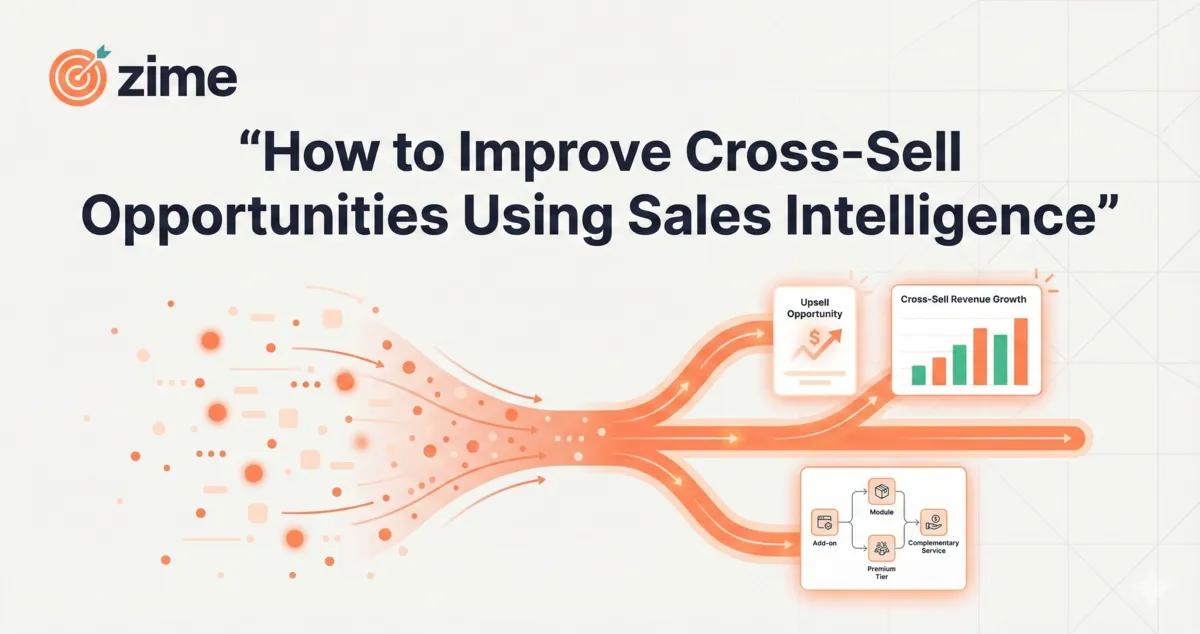
Sales intelligence improves cross-sell opportunities by automatically identifying expansion signals through customer analytics, intent data, and engagement patterns. Companies using data-driven B2B sales engines report 15-25% EBITDA increases, while those excelling at cross-selling see 20-30% revenue increases.
At a Glance
• Modern sales intelligence combines AI-derived insights with automated data capture to identify expansion opportunities before competitors
• 75% of B2B sales organizations will adopt AI-guided selling solutions by 2025 according to Gartner
• Three critical signal types predict cross-sell success: customer analytics, intent data, and engagement health scores
• Companies that gather buyer intelligence increase account growth by 5%, which compounds significantly across customer bases
• Effective cross-sell strategies require separate tracking from net-new acquisition with distinct KPIs for cycle time, win rate, and pipeline coverage
Cross-sell revenue often plateaus once the initial deal closes. Sales reps move on to fresh logos, account managers juggle dozens of relationships, and expansion conversations slip through the cracks. Yet B2B teams that apply sales intelligence, the data-driven discipline that flags, scores, and times expansion signals, break through that ceiling and turn random upgrades into a predictable growth engine.
This guide walks through exactly how to harness sales intelligence for cross-sell success: what it is, which signals matter most, a proven five-step framework, the right technology choices, and the metrics that prove your strategy is working.
Cross-Selling Is Stalling—Data-Driven Sellers Break Through
"B2B cross-selling and upselling are complex processes requiring a coordinated effort to help grow the value of existing customers," according to Forrester research. The challenge? Many organizations fail to set defined plans and processes for expansion efforts as they would for new business.
The upside is substantial. Sellers who gather buyer intelligence increase account growth by 5%, according to Gartner. That may sound modest until you multiply it across hundreds of accounts and consider that existing-customer deals close faster, cost less to win, and carry higher margins than net-new logos.
The gap between ad-hoc expansion outreach and systematic, signal-driven cross-selling is where sales intelligence creates value. Rather than relying on gut feel or quarterly business reviews to surface opportunities, modern revenue teams embed intelligence directly into the flow of work so reps know exactly when a customer is ready for the next product.
What Exactly Is Modern Sales Intelligence?
Forrester defines B2B sales intelligence as "solutions that offer data, insights, and data management services to optimize sales efficiency and effectiveness." But that definition undersells the transformation underway.
Traditional sales intelligence meant static contact databases and firmographic enrichment. Modern sales intelligence goes further. It automates data capture, reducing errors and time from manual entry. Sales intelligence vendors can automate maintenance of account-related data.
Platforms now supply AI-derived insights and alerts based on events like mergers, acquisitions, and announcements, or activities such as website visits and self-guided interactions. Artificial intelligence in sales refers to the use of AI in sales tools and processes to help sellers work more efficiently, simplify the buyer journey, and enhance the customer experience.
The critical shift is from static data to dynamic guidance. Static tools tell you who to call; modern sales intelligence tells you when to call, what to say, and which expansion offer is most likely to resonate.
Which Data Signals Predict Cross-Sell Potential?
Not all data is created equal. Effective cross-sell strategies layer three signal types to identify expansion moments before competitors do.
Customer analytics technologies improve the customer experience and retention with individualized customer understanding, and increase customer lifetime value by optimizing customer interactions. For cross-sell, look for usage gaps or feature-adoption patterns that reveal unmet needs, support ticket themes that signal pain points your other products solve, and contract renewal timing and expansion budget cycles.
A logistics company mined historical ordering patterns to identify cross-sell opportunities within its customer base and then built tailored microcampaigns around those opportunities. Simply by identifying underserved customers, the company boosted revenues fivefold for its pilot products, according to McKinsey.
Intent analytics provides signals that help organizations understand where buyers are in their journey. For expansion plays, intent data reveals when existing customers are researching adjacent solutions you offer, competitor alternatives for capabilities you already provide, or industry trends that align with your roadmap.
Reading Buyer Intent Beyond The Buying Cycle
Most B2B organizations apply intent data only to limited use cases, such as identifying accounts that are in an active buying cycle. By doing so, organizations leave revenue on the table.
Organizations can use signal intensity to identify whether a prospect is in the early research phase, actively evaluating solutions, or nearing a purchase decision. For cross-sell, this means catching expansion intent before a formal RFP emerges.
By focusing resources on opportunities with the highest potential, companies can maximize ROI and minimize waste.
Key takeaway: Layer customer analytics, intent data, and engagement health scores to surface cross-sell moments that single-source approaches miss.
How Do You Operationalize Cross-Sell In Five Steps?
Forrester introduces a five-step approach for implementing a structured and consistent strategy for cross-selling and upselling. Here is how to translate that framework into daily execution:
Step 1: Define expansion opportunity types. Cross-sell, upsell, and renewal each have distinct conversion rates and velocity patterns. Map them separately in your CRM so you can track and optimize each motion.
Step 2: Identify trigger events. Document the customer behaviors, usage thresholds, and intent signals that historically precede expansion deals. These become the rules your sales intelligence platform monitors.
Step 3: Equip reps with the right tools and training. Sales reps need real-time guidance, not quarterly training decks. Versa Networks struggled with a long sales cycle and ineffective lead qualification due to poor adoption of sales playbooks. By delivering just-in-time actions to sales reps, they achieved a 20% increase in pipeline by reducing wastage of leads.
Step 4: Standardize qualification criteria. Ensure your reps are qualifying every expansion deal against the same methodology. AI can automatically complete opportunity scorecards using key context from every customer interaction.
Step 5: Measure and iterate. Track expansion-specific metrics separately from net-new. Use win/loss analysis to identify behavior gaps and refine your playbooks continuously.
Just-In-Time Coaching Turns Insights Into Habits
Identifying cross-sell signals is only half the battle. The harder part is ensuring reps act on those signals consistently. Austin Fanning, Sr. Director of Sales at SonicWall, shared his team's experience: "Zime win/loss report highlighted that ~70% of our reps skipped clear next steps; its targeted coaching corrected it and our closed-won climbed 40% within 6 months."
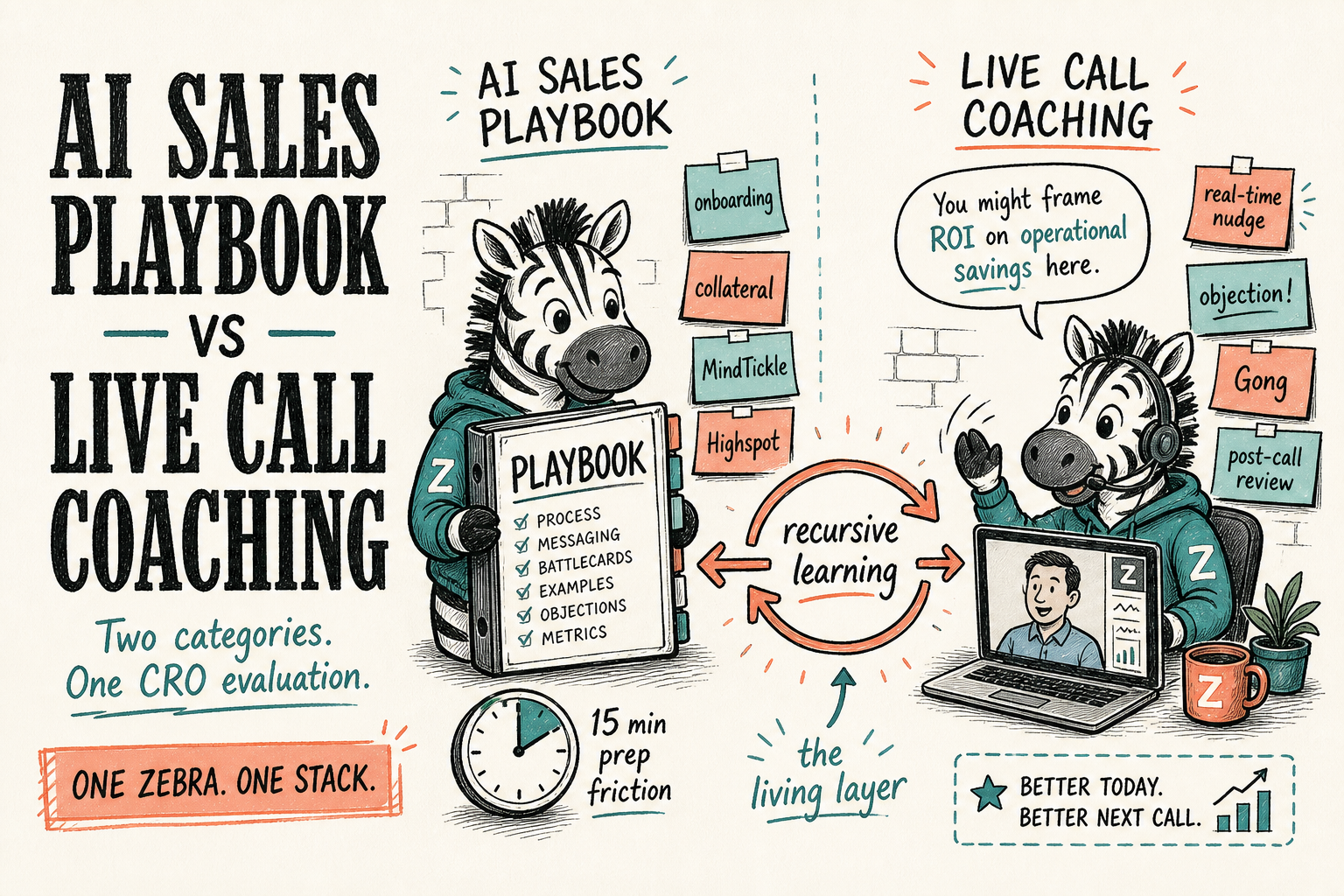
The difference between knowing and doing is where dynamic coaching bridges the gap. Living AI Playbooks that continuously learn from real wins and losses help embed expansion behaviors into every deal, not just the ones led by top performers.
Selecting Technology: From Predictive Scoring To AI-Guided Selling
By 2025, 75% of B2B sales organizations will augment traditional sales playbooks with AI-guided selling solutions, according to Gartner. For cross-sell specifically, three technology capabilities matter most:
1. Predictive Opportunity Scoring
Predictive opportunity scoring in platforms like Dynamics 365 Sales helps sales teams prioritize high-likelihood opportunities. The model uses historical data and key factors to assign scores, letting reps focus effort where it will generate the greatest return.
2. Dynamic Deal Scoring
Traditional pipeline stages are often driven by rep optimism, not buyer behavior. Dynamic deal scoring replaces static stage logic with objective health scores based on actual signals: stakeholder engagement, sentiment shifts, next-step clarity, urgency, and timeline movement.
3. AI-Guided Selling Workflows
AI-guided selling enables the multithreaded customer buying experience. Progressive sales organizations are already using AI to determine what content resonates with buyers and then recommend tools and content to share at the right moment.
Predictive Opportunity & Deal Health Scores
The score displayed is typically a number between 0 and 100, where a higher score indicates a higher likelihood of conversion. Key factors influencing the score include the opportunity's age, estimated revenue, and the number of activities associated with it.
For cross-sell deals, look for systems that calculate health scores based on actual signals: stakeholder engagement, sentiment shifts, and next-step clarity, providing the ideal next steps to recover at-risk deals.
When evaluating technology, prioritize platforms that integrate seamlessly with your existing CRM, require minimal manual data entry from reps, provide deal-specific guidance rather than generic recommendations, and continuously learn from your team's wins and losses.
What Metrics Prove Your Expansion Strategy Works?
Measurement separates hope from strategy. High-performing sales organizations embed analytics into their expansion motions. In fact, 53% of high-performing organizations rate themselves as effective users of analytics, according to McKinsey.
Track these KPIs to prove your cross-sell strategy is working:
1. Cross-Sell Revenue as % of Total
What it measures: The specific contribution expansion revenue makes to your overall company growth.
The Target: Successful strategies can see a 20-30% increase in this contribution over time.
2. Cross-Sell Cycle Time
What it measures: The velocity of expansion deals from first mention to close.
The Target: These deals should consistently close faster than net-new customer acquisitions, as the trust and legal hurdles are already cleared.
3. Cross-Sell Win Rate
What it measures: Your conversion efficiency when pitching to your existing base.
The Target: This rate should be significantly higher than your acquisition win rate, reflecting the strength of the existing relationship.
4. Expansion Pipeline Coverage
What it measures: The health and volume of future expansion opportunities currently in the works.
The Target: Maintain a coverage ratio of 3x or greater relative to your expansion quota to ensure consistent delivery.
5. Account Penetration Rate
What it measures: The average number of distinct products or services used per customer.
The Target: You want to see this increasing quarter-over-quarter, signaling that customers are finding deeper value in your ecosystem.
Companies that excel at cross-selling and upselling can see a 20% to 30% increase in revenue, according to industry benchmarks. More broadly, companies using data-driven B2B sales-growth engines report above-market growth and EBITDA increases of 15 to 25 percent.
Sellers who gather buyer intelligence increase growth by 5%. While that may seem incremental, the compounding effect across your customer base creates substantial long-term value.
Key takeaway: Measure expansion separately from net-new acquisition to identify what's working and where to invest.
Sales Intelligence Turns Expansion From Guesswork To Science
Cross-sell success is no longer about hoping account managers remember to mention your other products. It is about embedding intelligence into every customer interaction so that expansion opportunities surface automatically, reps receive guidance on exactly what to do next, and managers can track whether behaviors are translating into results.
The playbook is straightforward:
- Define what modern sales intelligence means for your organization
- Identify the customer analytics, intent, and engagement signals that predict expansion
- Operationalize a five-step cross-sell framework with clear triggers and qualification criteria
- Deploy technology that scores, guides, and automates expansion workflows
- Measure expansion KPIs separately and iterate based on what the data reveals
Bureau, a no-code identity decisioning platform, implemented this approach and realized a 30% increase in deal conversion from improved discovery and more efficient sales processes.
The organizations that treat expansion with the same rigor they apply to net-new acquisition will capture disproportionate growth. Sales intelligence provides the foundation. The question is whether your team will build on it.
Ready to move beyond static training and scale winning behaviors across your revenue team? Platforms like Zime help organizations embed sales intelligence into the flow of work through Living AI Playbooks that continuously learn from real conversations, deals, and outcomes.