Blog
Why Sales Enablement Fails to Move Revenue?
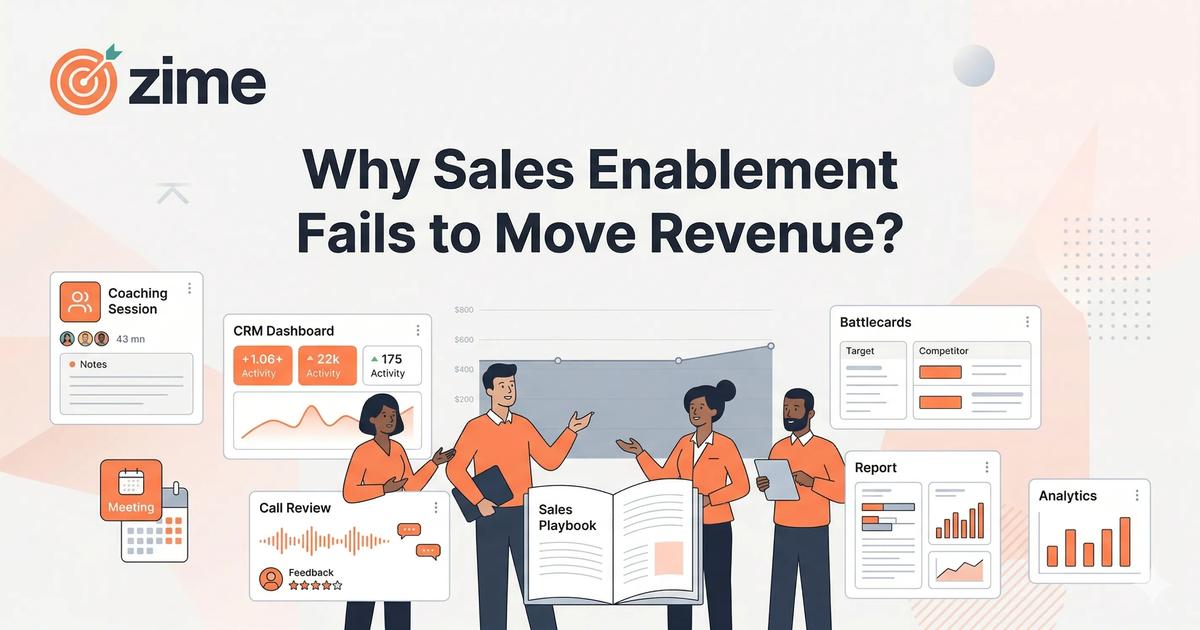
Sales enablement fails to move revenue because it focuses on knowledge transfer rather than behavior change. Most organizations build playbooks, run training pr
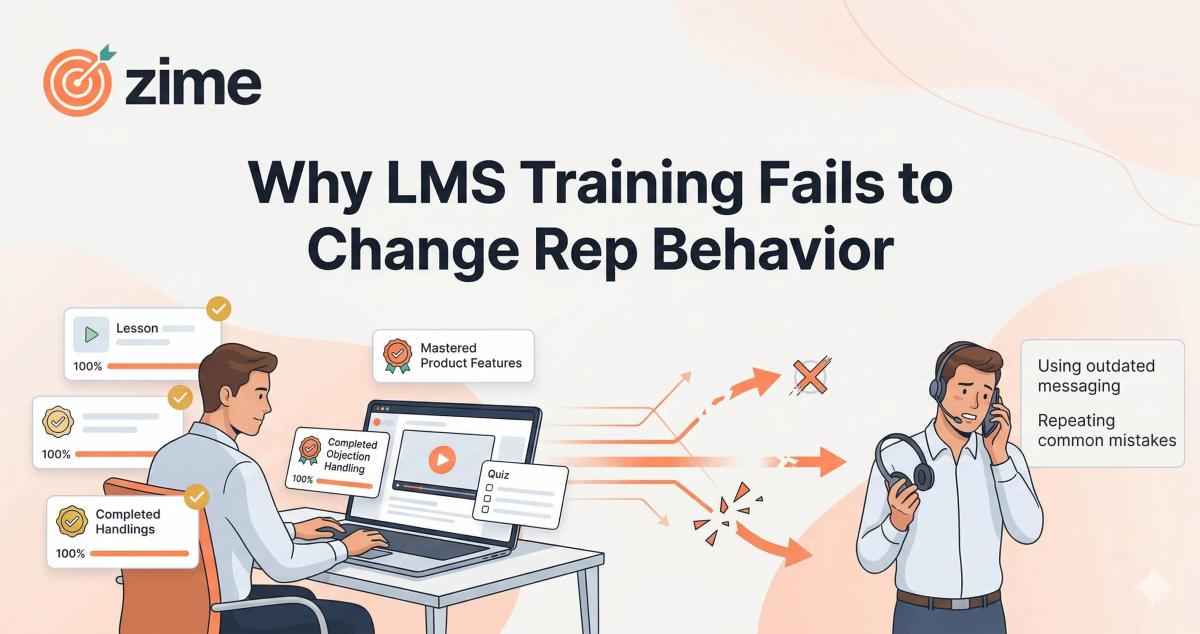
There is a pattern surfacing repeatedly across B2B SaaS revenue teams. Reps complete training. Certifications get logged. Managers report green on enablement dashboards. Then the next discovery call happens and runs exactly like the one before the training existed.
This is not a content quality problem. A specific operational failure sits at the root of why LMS training rarely produces durable behavior change. Revenue leaders who understand this distinction stop rebuilding course libraries and start rethinking how behavior actually forms in a sales context.
The direct answer: LMS training transfers knowledge. It does not change behavior. Behavior changes when reps receive specific, contextualized feedback at the moment execution fails, repeatedly, with accountability tied to outcomes they care about.
This challenge hits hardest for VP Sales, CROs, and Enablement Leaders managing growth-stage B2B SaaS teams of 30 to 150 reps, often running two or more sales motions (enterprise and mid-market, or inbound and outbound).
The profile is consistent: they have a call recorder, a CRM, and an LMS. They have run a Sales Kickoff enablement sprint. They can report training completion rates. They cannot tell you whether reps are executing the right discovery steps on this Monday's calls.
These are not failing organizations. They are organizations where tooling has scaled faster than execution visibility.
The symptom shows up in pipeline health before it appears in win rates. Deals get marked qualified without a documented budget conversation. Discovery notes in CRM look generic. The same objections resurface in late-stage calls that should have been handled in the first meeting.
At the rep level, the problem is inconsistency. One rep runs excellent discovery. Three others skip consequence-of-inaction questions entirely. At the manager level, coaching becomes reactive, reviewing outcomes after deals are already lost rather than correcting behavior while deals are in motion. Salesforce's State of Sales research reports that 67% of sales leaders cite inadequate forecasting accuracy, a signal that behavior gaps in upstream discovery corrupt pipeline data at scale.
Most playbooks exist as documents, decks, or LMS modules. Reps access them during onboarding and rarely again. Research from SiftHub shows that 87% of training content is forgotten within 30 days of completion. A rep who completed discovery training six weeks ago has no reliable mechanism to recall that content in the middle of a live call.
Teams invest in call recorders expecting behavioral insights. These tools generate activity data, but they cannot encode the nuanced qualification logic that makes a specific company win deals. According to Gartner, 77% of sellers struggle to complete tasks efficiently due to poorly integrated frameworks that add complexity rather than streamline their workflows.
Coaching Is Outcome-Based, Not Behavior-Based
Most sales managers inspect pipeline, not rep behavior on calls. Forrester notes that 89% of sales enablement teams launch new sales methodologies annually, creating change fatigue when adoption infrastructure does not follow. Managers are left reviewing what happened, not shaping what is about to happen.
Knowledge transfer stops after training ends. Behavior change requires spaced reinforcement, correction loops, and accountability. Organizations with highly effective sales training are 4.8 times more likely to provide ongoing reinforcement, according to MarketsandMarkets research. Without this architecture, even well-designed programs produce changes that regress within a quarter.
When win rates stagnate or discovery quality slips, most revenue teams cycle through the same interventions.
Each move feels logical. None of it is wrong in principle. All of it shares the same structural flaw.
These interventions all deliver guidance at a distance from execution. A playbook reviewed in a training session does not translate into behavior on a call three weeks later, because the rep has no in-the-moment signal that the playbook applies to the conversation happening right now.
Methodology training has a compounding problem. Reps complete the program and return to the field without any mechanism connecting the methodology to the specific deals in their pipeline. The language of MEDDIC or Challenger stays in the training room. Gartner research specifically highlights behavioral nudges and just-in-time learning as the most effective mechanisms for field behavior change, yet both require delivery infrastructure that LMS platforms are not designed to provide.
Companies that attempt to configure generic AI tools for nuanced sales behavior learn this the hard way. Fine-tuning a model to understand company-specific qualification logic, terminology variations, and deal-stage nuances takes months of sustained engineering effort. Most revenue teams do not have that capacity, and the model degrades as the business evolves.
High-performing teams separate content delivery from behavior reinforcement. These are fundamentally different functions.
Behavior change in sales requires three conditions working together: situational context, immediate feedback, and consistent accountability.
Situational context means a rep receives guidance specific to the deal in front of them before the call, not general discovery principles. Immediate feedback means post-call analysis mapped to the actual playbook, not generic sentiment scores. Consistent accountability means managers have evidence-based visibility into which reps are executing playbook steps and how that connects to deal outcomes. Companies offering formal, behavior-anchored coaching report a 16.7% higher win rate than those that do not. One of Zime’s customers saw their win rate improve from 10% to 18% after consequence-of-inaction coverage on calls increased from 40% to 80%, a direct result of reinforcement infrastructure, not additional training.
Navin Madhavan leads Revenue Operations at Amagi, an India-headquartered broadcast cloud SaaS company with global operations serving enterprise broadcasters and high-velocity streaming customers. Managing a dual-motion sales team across SMB and enterprise segments, Navin captures the adoption reality that most RevOps leaders recognize immediately:
"The challenge is more than the ability of the tools itself. How does a rep actually use it? As somebody in RevOps who rolls out multiple tools to reps, they dislike the fact that there is a new tool coming their way. It's eventually about showing them their chances of wins are going higher, and they have to believe that."
Reflecting on months of attempting to drive behavioral change through a call recorder rollout before any meaningful shift appeared, he continued:
"It's been a journey over the last 6 to 9 months to drive adoption for call recording from reps, and now finally some of them getting out of the mindset that this is not necessarily a big brother, as much as it's helping them with productivity and getting things done."
Christian Piuma is a Sales Enablement Leader working with mid-market software and services companies on revenue growth and funnel conversion coaching. He identified precisely why manager instinct does not scale and why LMS training cannot close that gap:
"One of the big mysteries I've had is trying to coach sales reps who don't possess my brain in terms of being able to assess a situation extremely fast. What are the objections? What are the pain points? Reps miss that all the time. They're so focused on their pitch, they miss the objections. Before, it was more my mastery in how I process things. It was difficult to communicate that to a rep."
Extract the specific questions your top reps ask at each deal stage from actual call recordings. Reps adopt guidance they recognize from colleagues who close deals, not language from a certification program.
Before each call, the rep should receive deal-specific context: open objections from the previous meeting, customer pain signals already surfaced, and how top reps handle the specific situation ahead of them.
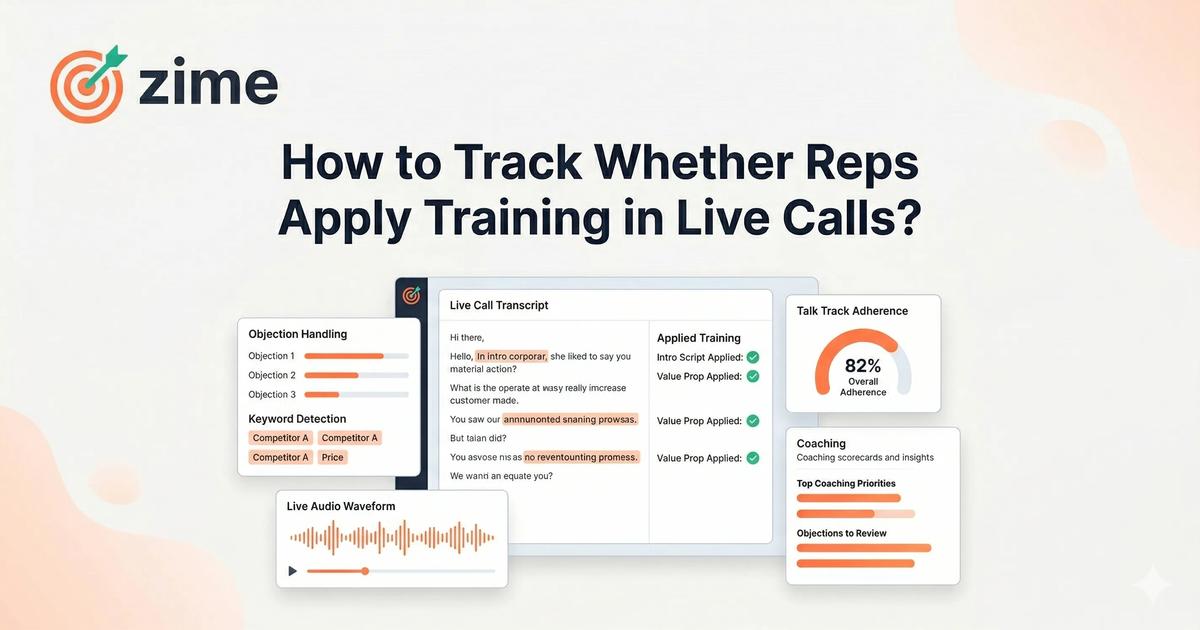
Track whether reps are executing playbook steps on each call. Consequence of inaction surfaced. Timeline established. Competitive differentiation addressed. These are observable and measurable.
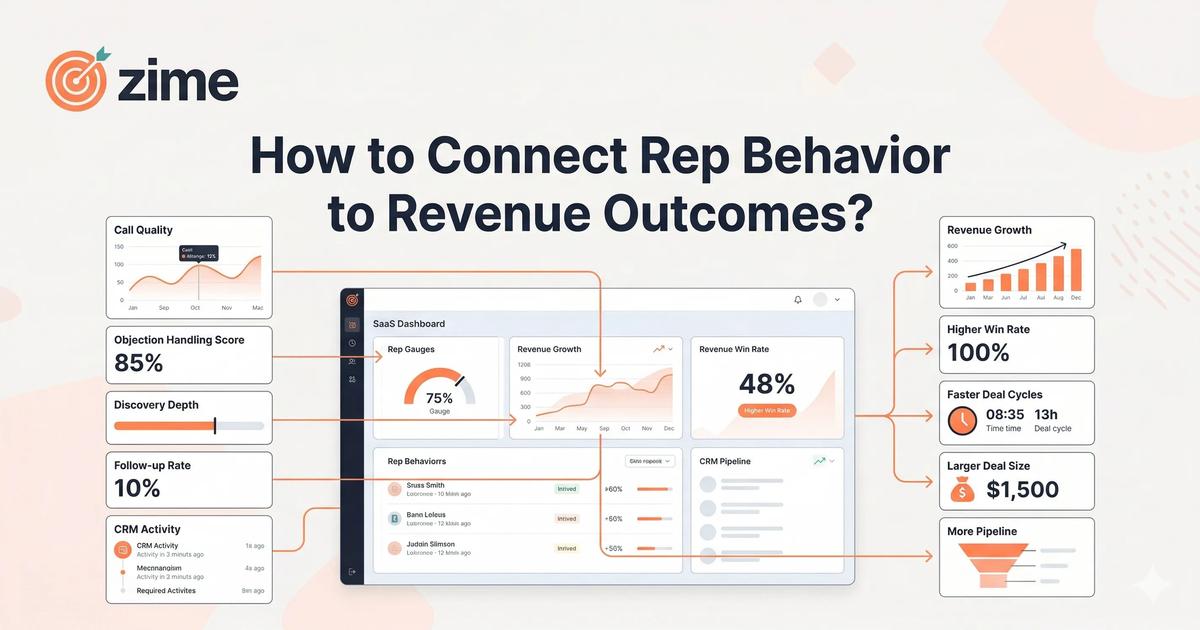
Managers should see which reps are following the playbook and where execution breaks down, connected to deal movement. This shifts pipeline reviews from outcome inspection to proactive coaching.
Win-loss patterns should continuously update the playbook. If deals lost for pricing reasons show reps consistently skipping cost-of-inaction conversations, that insight should feed back into the next prep note, not the next SKO.
Answer these questions to locate where the gap sits:
If most of these reveal gaps, the issue is not the content of your training. The issue is the absence of an execution reinforcement system.
LMS training does not change rep behavior because it was never designed to. It transfers knowledge. Behavior change is a reinforcement, context, and accountability problem that requires a different infrastructure entirely.
Revenue leaders who understand this stop asking how to improve course completion rates and start asking how to make playbook execution visible and coachable at the deal level. That is the shift. Closing the gap between knowing what good looks like and consistently doing it in the field is not a training initiative. It is an execution architecture decision.
If reducing discovery inconsistency and moving beyond completion metrics is something your team is actively working through, it can be useful to see how other revenue teams are making execution visible at the deal level in practice.
Zime is built to operationalize playbooks in real time, deliver deal-specific rep guidance before each call, and give managers the behavior data needed to coach with specificity rather than instinct. A short walkthrough across real deal scenarios can help you evaluate whether this approach fits the gap your team is experiencing.
Book a Demo to See how Zime operationalizes playbooks in live deal scenarios