The GTM Agent Ghost Town: What GTM Leaders Said About Getting AI Used in Live Deals


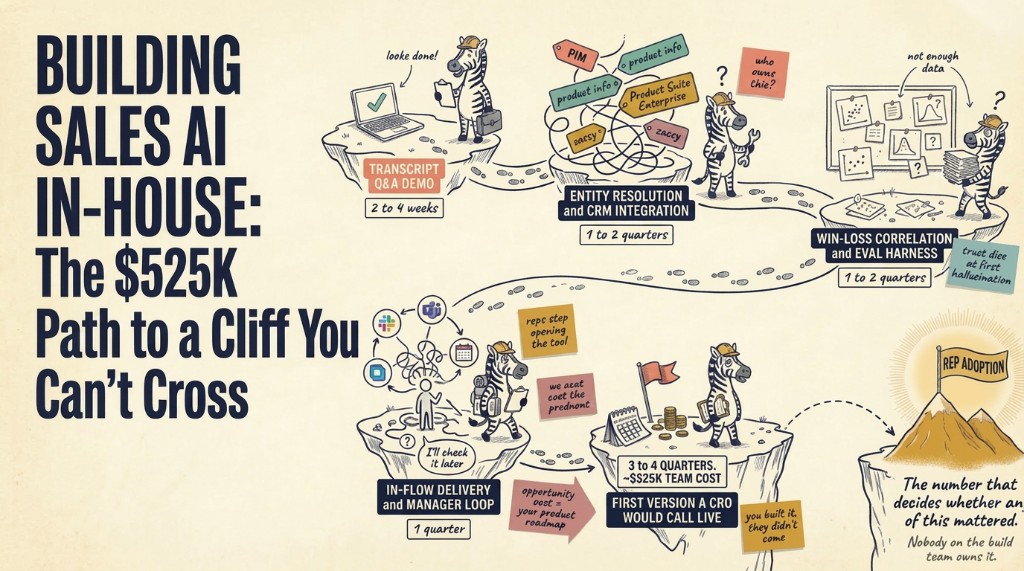
- The problem: GTM teams can build AI agents, but most get stuck at around 20% rep adoption, and top performers are often the most resistant.
- What drives adoption: reps use AI when they’re stuck on a live objection, or when managers build it into pipeline review. Insights on their own don’t change behavior.
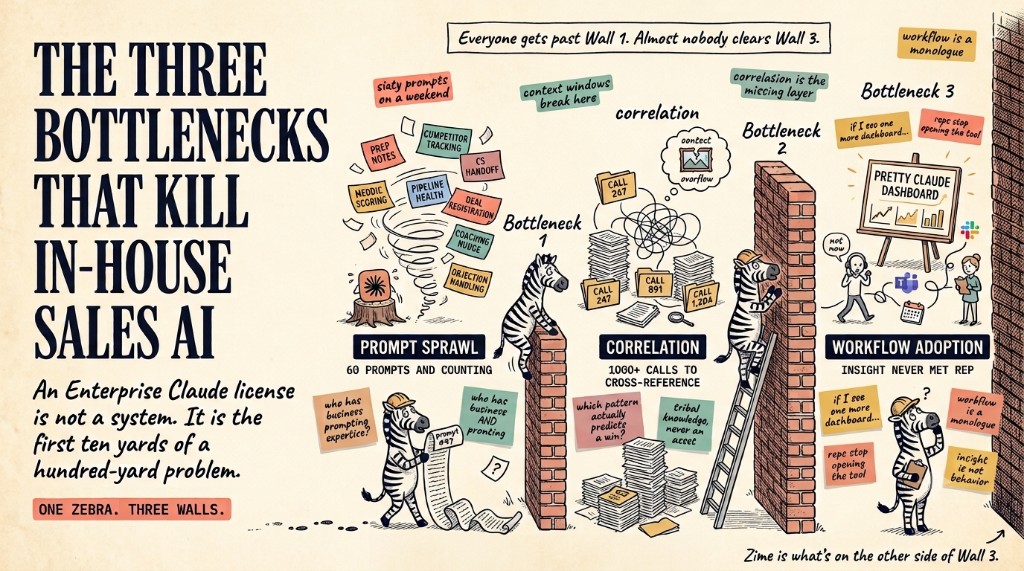
- The hidden blocker: tribal knowledge is easy to capture but hard to keep current. Skills sprawl, go stale within months, and nobody owns them.
- Where AI pays off most: SDRs, mid-market and new business benefit most. Long-tenured enterprise relationships benefit least.
- The open questions: how to get past 20%, how to tie AI to revenue rather than logins, and how to keep tribal knowledge alive as the org changes.
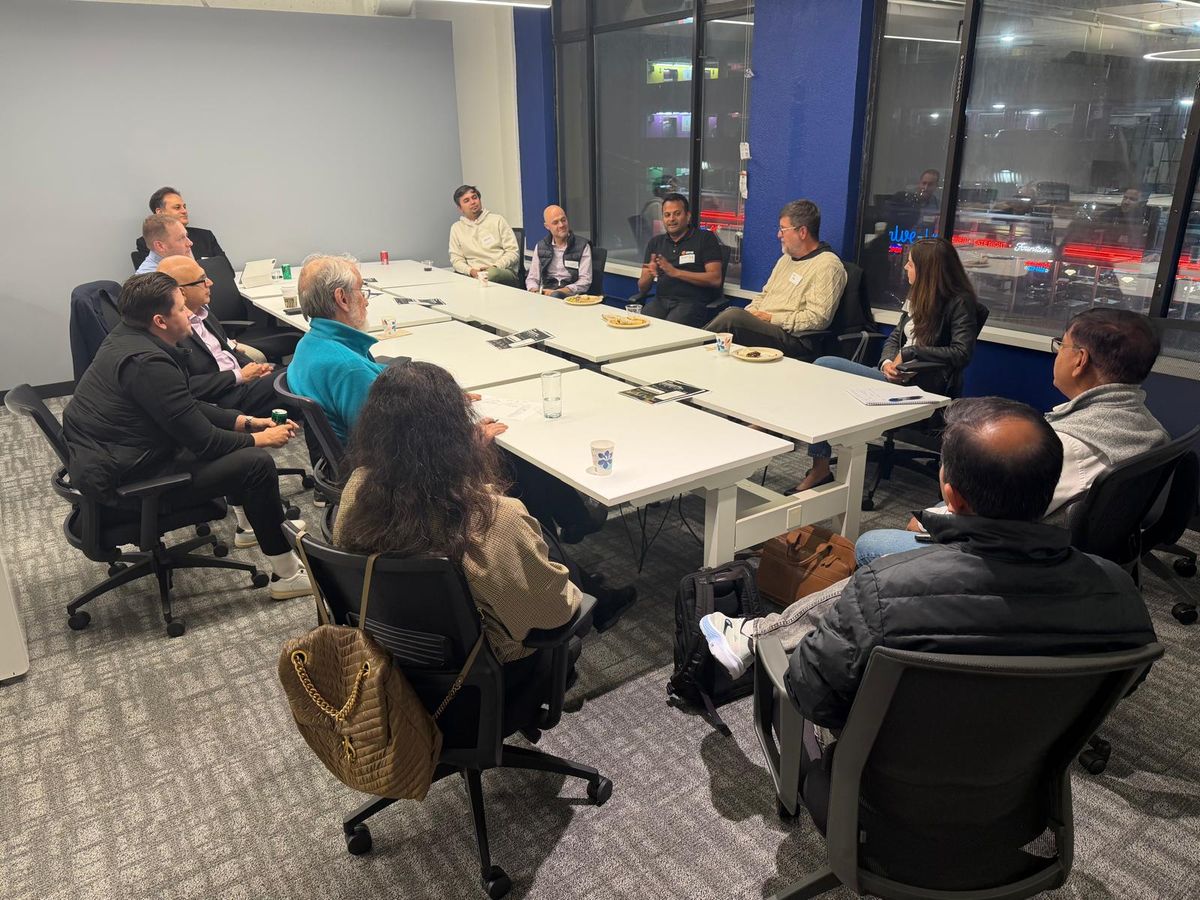
Most GTM teams can build an AI agent. Far fewer can get reps to open it on a live deal. That gap was the subject of a dinner roundtable Zime hosted in San Francisco on November 4, 2026.
Around a dozen GTM, RevOps, deal desk and partnership leaders joined, from companies including Visa, Google, Salesforce, ServiceNow, Shopify and Scale AI. We called it "The GTM Agent Ghost Town": agents get built, launched and announced, and then the field quietly stops using them.
At a glance
Zime CEO Sanchit Garg summed up the night in four words: "Agents done, adoption none." Five pain points came up again and again. Here is each one, and how we think about it at Zime.
- Adoption stalls at 20%. What the room said: top reps say "I know my client" and skim AI output. The Zime lens: Behaviors delivered at the moment of the deal, in Slack, Teams and CRM, not in another tab.
- Activity is not outcomes. What the room said: logins and summaries don't show whether a deal was won. The Zime lens: every Behavior tied to win rate, ACV and deal cycle, so adoption has an ROI story.
- Tribal knowledge stays tribal. What the room said: top reps can't explain what makes them good, and generic output breaks trust. The Zime lens: best reps' winning behaviors and sales leaders' strategy and quarterly initiatives, encoded into one Execution Context.
- Skills sprawl and go stale. What the room said: 1,000+ skills at one company, under 10% adoption, and no owner. The Zime lens: living AI Playbooks that update as buyers, products and initiatives change.
- Context breaks at every handoff. What the room said: SDR to AE to SE to CS, with the customer the only constant. The Zime lens: one shared context that every team, and every in-house agent, draws on through MCP.
The 20% ceiling
Most organizations in the room were stuck at roughly 20% of reps actively using their AI tools. Getting from 20% to 80% was the problem everyone wanted to solve.
The resistance is not where you might expect. Top performers and long-tenured sellers are often the most reluctant, and the objection is almost always the same: "I know my client." Yet the sellers who do run the agents tend to say the opposite once they try it: why didn't I use this earlier?
The room also drew a hard line between usage and results. Power users are not automatically revenue drivers. Efficiency gains do not turn into outcomes on their own, and most AI tools still stop at summaries and next steps. What's missing is guidance on what to do in this deal, with this buyer, right now.
The Zime lens: Adoption follows relevance. Reps act on guidance that fits the deal in front of them, drawn from what their best peers did in similar deals, and delivered where they already work.
Insight is not behavior change
Evidence is necessary, but it isn't enough. Knowing the gym is good for you doesn't get you there. Sellers skim AI output and fall back on what feels natural.
The group landed on two moments when adoption actually happens:
- The stuck moment. A seller hits an objection they can't handle and needs guidance right then.
- The accountable moment. A CRO or manager makes the agent part of pipeline review, with real accountability behind it.
Reps follow managers not because managers always prioritize better, but because managers hold them accountable. As one participant put it, an agent can never compete against the manager. The better idea is to make the agent the manager.
Trust matters too. It breaks the moment output looks like generic chatbot text. It builds when an insight is tied to a live company initiative and backed by evidence from the seller's own deals.
The Zime lens: Make the agent part of how the manager runs the team. When Pipeline Review and coaching run on the same Behaviors reps see in their prep notes, the guidance carries the manager's accountability, not just the tool's.
Tribal knowledge: capturing it, and keeping it alive
Tribal knowledge is the unwritten playbook: how top reps handle a specific objection, when to offer a proof of concept, how they qualify. It is what separates the best sellers from the rest, and it rarely makes it into training.
The room shared several ways teams are trying to capture it:
- Interviewing top performers and analysing recorded deal conversations to pull out repeatable patterns
- Turning pitch decks, meeting transcripts and prompts into reusable "skills" for sellers
- Recording win/loss reviews and using AI to find the behaviors that winning deals share
Capturing it turned out to be the easy part. Skills multiply fast: one participant had seen more than 1,000 at a large company, with under 10% adoption. Buyer personas and products shift every few months, so skills go stale, and nobody owns updating them. There's also no way for reps to discover what exists. One idea from the room: an internal "app store" for skills, with ratings, comments and weekly active use.
The Zime lens: Treat tribal knowledge as a living system, not a library. Learning from every recorded call keeps Behaviors current as buyers, products and quarterly initiatives shift, so reps get a few relevant moves instead of a catalog to search.
What working agents look like
The agents that are getting used share one trait: they show up before the seller asks, inside tools the seller already lives in. Examples from the room:
- Proactive agents that wake up ahead of a contract renewal, research the account, build the assets, and scan the customer CEO's earnings calls for hooks.
- Reactive agents that produce a client-specific battle card, talk track or deck on demand.
- Morning briefs that send each seller their top priorities by email or chat at the start of the day.
- Seller-built tools that combine CRM data, query data, revenue pacing and anomaly signals, including a dashboard one seller built by pulling meeting context from 40 colleagues on a single account.
- Weekly chat nudges that surface deal summaries and ageing leads, which one team found cut pipeline leakage.
One idea stuck with the group: a "context brain" that runs quietly across every meeting and acts as a strategic adviser in the background.
Collaboration beats mandates
Adoption spreads more reliably through teams than through individual mandates. When sales engineers, customer success or other teammates use an agent and share what it produces, sellers get pulled in on their own.
The bigger structural problem is context lost at every handoff. A customer moves from SDR to AE to SE to deal desk to customer success to renewals, and the customer is often the only constant who knows the whole story. Participants described product teams cold-emailing the same customer without knowing about each other, and partners and direct sellers working one account with no shared context.
Handoffs also differ by company. A partner handoff isn't a direct-service handoff, and no two companies run them the same way. Generic AI can't encode those differences without the tribal knowledge of how each organization actually works.
The Zime lens: Shared context is infrastructure. When every role and every in-house agent draws on the same Execution Context, the handoff stops being where the customer's story gets lost.
Where AI fits best
Not every seller needs an agent equally. The room broadly agreed on where the payoff is highest:
- SDRs: high fit. Prospecting, ICP filtering and intent signals are a natural match.
- Mid-market and inside sales: highest fit. More accounts, faster cycles and less relationship depth.
- New business: high fit. Agents add far more on new accounts than on existing ones.
- Enterprise, long-tenured relationships: lowest fit. Sellers already know the client, so agents mostly surface what they already know.
At scale, voluntary adoption isn't enough; the group agreed it takes a top-down mandate. One participant summed it up: if your sales team isn't AI-native, you don't have the prerequisites to work as an AI-native team.
Buyers are changing too. They now use AI agents to red-team vendor proposals, and buying committees are larger and harder to see. Matt Dixon's research in The JOLT Effect found that around 60% of enterprise deals end in no decision. The real competitor is indecision, which means the job shifts from creating fear of missing out to reducing the buyer's fear of messing up.
Three questions from the room:
By the end of the night the group had converged on three open questions:
- How do you take AI adoption past the 20% power-user ceiling?
- How do you tie AI output to revenue outcomes, not vanity metrics like logins and summaries generated?
- How do you capture and maintain tribal knowledge at scale, in an org that keeps changing?
One answer to the first question may be compulsory gates rather than voluntary nudges. For example, discounts could be approved only through the agent, so using it is part of how the job gets done.
The pace of change is the backdrop to all of this. 2027 came up as an inflection year, and several people noted that thinking from six months ago already feels old school.
Where Zime fits
One attendee put it well in a post after the dinner: treat AI adoption like a sales motion. Know your buyer (the rep), find their pain, and prove value on their deal, not on a slide.
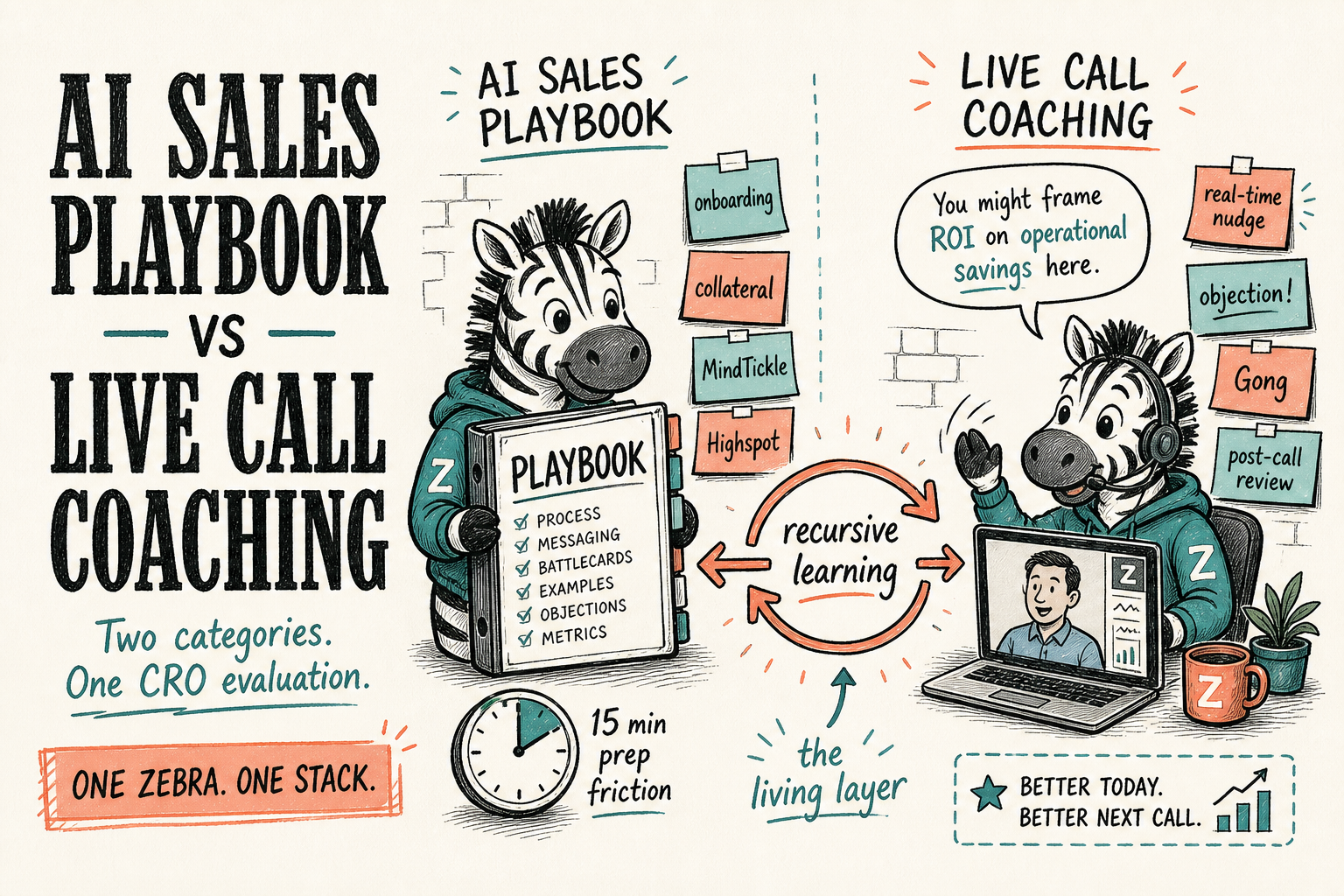
For GTM builders, the missing piece is not another agent. Most teams already have the context: CRM, call recordings, a context graph, and a growing harness of skills, workflows and MCP servers. What's missing is the layer on top. It turns tribal knowledge into Behaviors reps trust, gets them run in live deals, and keeps the harness current as strategy shifts. That is the GTM infrastructure layer Zime provides.
- Where reps work. What GTM teams already have: Slack, Teams, Claude and CRM. What Zime adds: the right judgement before the call, with a receipt from similar won and lost deals.
- Adoption. What GTM teams already have: logins, prompts and active users. What Zime adds: Programmatic Adoption, counted as Behaviors executed and traced to deal movement.
- Behaviors. What GTM teams already have: playbooks, decks and generic AI output. What Zime adds: the Behavior Graph, with best reps' winning behaviors and sales leaders' strategy and quarterly initiatives, specific to role, product and competitor.
- Harness. What GTM teams already have: skills, workflows and MCP servers built in-house. What Zime adds: the Enterprise Sales Harness, with 100+ skills, workflows and MCP servers governed as one system and kept current.
- Context. What GTM teams already have: CRM, calls and a context graph. What Zime adds: it stays yours. Zime builds on it instead of replacing it.
The results show up as adoption, not just usage. The Behavior Graph draws on 1,200+ GTM behaviors trained with 50K+ human-in-the-loop hours. Across customers, 80% of reps run Behaviors within 90 days, with a 20% uplift in deals won.
Zime brings GTM leaders together to work through how AI actually changes sales execution in the field. If these questions are on your desk too, we'd love to have you at the table next time.